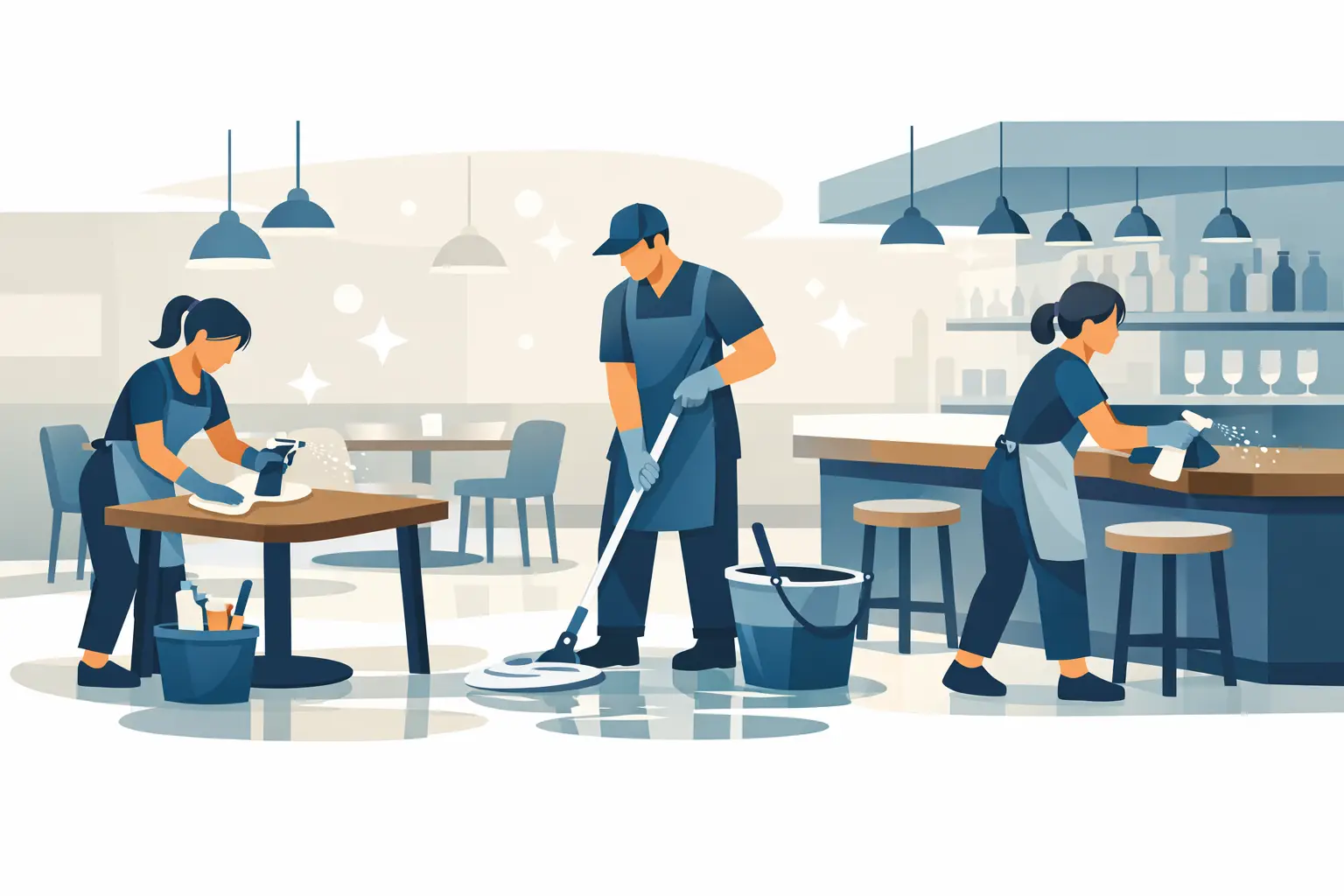
A failed hygiene check rarely starts with one big issue. It usually comes from small things that were missed during a busy shift - a neglected floor drain, grease building behind equipment, cloths used in the wrong area, or a washroom check that slipped because service got hectic. The best restaurant cleaning practices are the ones that still hold up when the kitchen is under pressure, staff are rotating, and covers are high.
For most restaurant operators, cleaning is not just about appearance. It affects food safety, audit performance, staff morale and how confidently customers use your space. A dining room can look spotless and still hide problems in prep zones, extraction areas and touchpoints that get handled all day. Good practice means building a system that is realistic enough to follow every day and detailed enough to catch the parts people tend to overlook.
What the best restaurant cleaning practices have in common
The strongest cleaning routines are structured around risk, not guesswork. That means cleaning frequencies are based on how a space is used, what food is handled there and how quickly contamination can spread. Raw prep zones, hand-contact surfaces and washrooms need more attention than low-traffic storage corners, but low-use areas still need a schedule so they do not become long-term problems.
The other shared trait is clarity. If staff are not sure what needs cleaning, when it should happen and which products to use, standards drift quickly. A practical cleaning plan gives each area a defined method, a frequency and a clear owner. It should also reflect the reality of service. There is no point writing a perfect checklist that cannot be completed between lunch and dinner.
Build your cleaning routine around service periods
Restaurants tend to clean in bursts - before opening, during service, after close and during quieter weekly windows. That is sensible, but only if each cleaning window has a clear purpose.
Pre-service cleaning should focus on readiness. This is the time to sanitise food prep surfaces, check washrooms, remove overnight dust, mop any hazards and make sure bins are lined and ready. It is not the right moment for deep degreasing that will delay opening or leave floors damp when staff are moving quickly.
During service, the priority shifts to contamination control and presentation. Tables, menus, card machines, door handles and toilets need frequent attention. In the kitchen, spills should be dealt with immediately, and cloths need to be changed often enough that they do not become part of the problem. This is where many operators cut corners because the team is focused on speed. In practice, quick cleaning done at the right moment prevents slower, more disruptive cleaning later.
After close is when heavier work belongs. Floors behind the line, grease around cooking stations, equipment exteriors, bin stores and drains all need proper attention once traffic stops. The trade-off is time. If the close-down list is too long, staff rush it. If it is too short, standards drop. The answer is usually to split tasks between nightly, weekly and monthly work rather than expecting every job to happen every night.
Kitchen cleaning needs zoning, not just effort
A common mistake is treating the kitchen as one cleaning environment. It is not. Delivery areas, dry storage, chilled storage, raw prep, cooking, plating and pot wash all carry different risks. The best restaurant cleaning practices separate these zones so methods and tools stay consistent.
Colour-coded cloths and mops help, but they only work if the team follows the system. A sanitiser used in one area may not be suitable in another, and contact times matter more than many teams realise. If a product needs a minute to work and it is wiped off after ten seconds, the surface may look clean without being properly sanitised.
Equipment also needs more than surface wiping. Fridge handles, oven knobs, slicers, extraction hoods and seals collect grease and bacteria in places staff stop seeing after a while. That is why periodic detail cleaning matters. It resets standards and catches the build-up that daily routines miss.
Floors, drains and hard-to-reach areas are where standards slip
If you want to know whether a cleaning system is genuinely working, do not start with the front of house. Check behind the fryer, under shelving, around skirting, under sinks and inside floor drains. These are the areas that reveal whether cleaning is procedural or just cosmetic.
Grease and food debris do not stay where they drop. They move with foot traffic, mop water and equipment wheels. Once they settle into edges and drains, odours, pests and slip risks are not far behind. This is why floor care has to be more than a quick mop at the end of shift. In kitchens especially, degreasing, rinsing and drying all matter.
It also helps to move equipment on a set schedule where safe to do so. If units are fixed, that may mean arranging specialist support for periodic deep cleaning. For busy sites, this is often more efficient than asking in-house teams to tackle inaccessible areas without the right tools or enough time.
Front-of-house cleaning still affects trust
Customers rarely see your prep stations, but they judge standards from what they can see. Sticky table edges, dusty vents, smeared glass and poorly stocked toilets suggest the rest of the building is managed the same way. Even when food quality is strong, poor cleaning lowers confidence.
Front-of-house cleaning should be frequent and unobtrusive. That means short checks through the day rather than one major sweep. Entrance glass, payment devices, chair backs, highchairs, condiment stations and washrooms all need regular resets. In restaurants with heavy takeaway traffic, door handles and collection counters often need far more attention than operators expect.
Washrooms deserve special mention because they influence perception fast. If they smell stale or run out of soap, customers notice immediately. A visible check schedule can help, but only if someone is actually accountable for it.
Staff training matters more than the product cupboard
Better chemicals will not fix poor habits. Most cleaning failures come from inconsistency - diluted products mixed incorrectly, dirty cloths reused too long, or tasks skipped because nobody checked. Training needs to be simple, repeated and tied to the exact environment staff work in.
Short task-based training tends to work better than one large induction session. Show people how to clean the slicer safely, how to sanitise a prep bench properly, and how to separate cleaning tools by zone. Then check that the method is still being followed a week later. Restaurants with high turnover need this built into operations, not treated as a one-off.
Managers also need to make cleaning visible. When standards are only discussed after a complaint, the message is clear: it matters only when something goes wrong. When cleaning checks are part of shift handover and close-down, the team treats them as core work.
Use schedules that people can actually complete
A cleaning schedule should be detailed enough to prevent ambiguity and short enough to be usable. If every task is placed on the daily sheet, the sheet becomes background noise. Separate immediate, daily, weekly and periodic tasks so teams know what must happen now and what can be planned.
Digital tracking can help, especially for multi-site operators or managers who are not always on the floor. It creates accountability and gives a clear record if standards are questioned. But paper or digital, the principle is the same: inspections need to lead to action. There is little value in logging missed tasks if nobody resolves them.
For some restaurants, the right answer is a mix of in-house daily cleaning and booked specialist support for deeper work. Extraction cleaning, kitchen deep cleans and intensive floor treatment often require more time and equipment than a service team can reasonably manage. That is where a structured booking model can reduce friction, particularly for operators who need reliable cleaning around trading hours.
When to bring in professional restaurant cleaning support
Not every job should sit with your staff. If grease is building despite daily cleaning, if washrooms are falling below standard, or if periodic tasks keep slipping, outside support may be the more efficient option. The cost has to be weighed against labour time, compliance risk and the disruption of trying to catch up later.
This is especially relevant for sites with long opening hours, small back-of-house teams or frequent staff turnover. A professional service can handle specialist tasks at the right frequency while your team stays focused on service and food preparation. For London operators managing tight schedules, using a platform such as Letusclean4u can make that process faster to book and easier to manage.
The best cleaning system is the one that people follow when the restaurant is busy, tired and still open tomorrow. If your routine depends on perfect conditions, it will fail. Build it around real service pressure, keep responsibilities clear, and fix the areas that are easy to ignore before they become the reason standards drop.