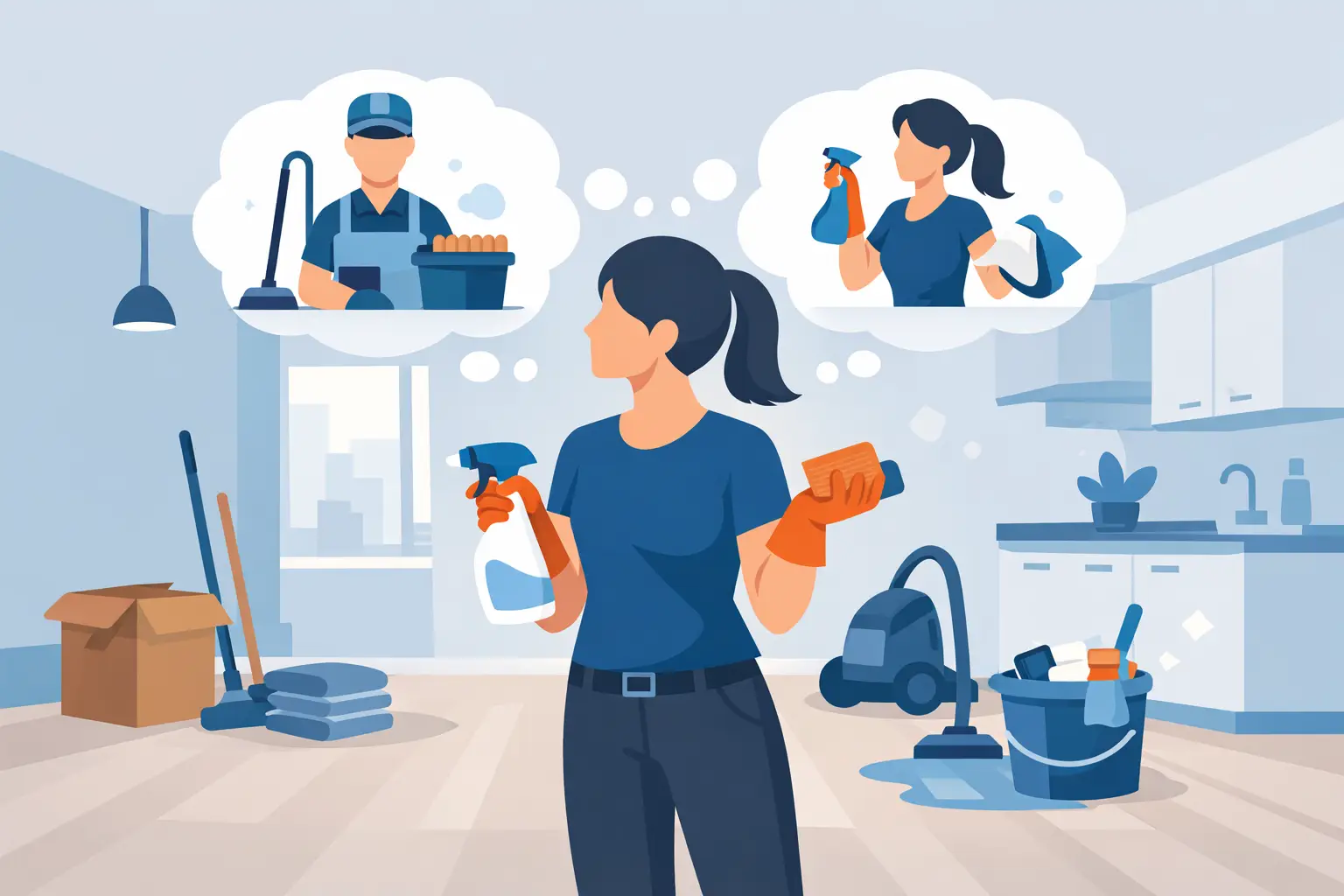
Handing back the keys is usually the easy part. The difficult bit is getting the property clean enough that a landlord or letting agent has no reason to raise deductions. If you are asking, can I do end of tenancy cleaning myself, the short answer is yes. The more useful answer is that it depends on the condition of the property, the standard expected in your tenancy agreement, and how much time you can realistically give it.
End of tenancy cleaning is not just a normal weekly clean with a bit of extra effort. It is a top-to-bottom reset of the property. That means grease in the oven, limescale on taps, marks on skirting boards, crumbs behind appliances and dust on places you may not have touched for months. If you do it yourself well, you can save money. If you miss key areas, the saving can disappear quickly in deposit deductions or the cost of booking a cleaner at the last minute.
Can I do end of tenancy cleaning myself and still get my deposit back?
Yes, you can. There is no rule that says you must hire a professional cleaner. In most cases, what matters is the result, not who does the work. Landlords and agents usually care about whether the property is returned in the same level of cleanliness as recorded at the start of the tenancy, allowing for fair wear and tear.
That said, some tenants get caught out by the gap between “clean” and “inspection clean”. A bathroom can look tidy but still fail on mould around sealant, soap residue on shower screens or limescale around the toilet base. A kitchen worktop can look fine until the inventory clerk checks inside cupboards, behind bins and under the sink.
So yes, DIY is possible, but only if you clean to inspection standard rather than to your usual standard.
When doing it yourself makes sense
DIY end of tenancy cleaning is usually a sensible option when the property is already in decent condition, the tenancy has been relatively short, and you have stayed on top of regular cleaning. A one-bedroom flat occupied by one careful tenant is very different from a family house with pets, heavy cooking and years of built-up wear.
It also makes sense if you have time. Proper end of tenancy cleaning often takes much longer than people expect. Even a small flat can take a full day, and larger properties can take a weekend or more if you are working alone. If your move-out schedule is tight, that pressure matters.
The other factor is equipment. If you already have strong cleaning products, descaler, degreaser, microfibre cloths, mop, vacuum with attachments and possibly a carpet cleaner, DIY is more realistic. If you need to buy half the kit first, the cost gap between doing it yourself and booking a service may shrink.
When DIY is likely to be a false economy
There are times when doing it yourself creates more risk than value. Heavy oven grease, stained carpets, pet odours, mould, hard water build-up and neglected bathrooms are the common problem areas. These jobs are slower, more physical and less forgiving if you do not have the right tools.
The same applies if your agent is known for detailed inspections or if your check-in inventory was extremely thorough. In those cases, missing small items can be expensive. A professional clean is not a guarantee against disputes, but it can reduce the chance of obvious cleaning-related issues.
For busy renters in London, time is often the deciding factor. Moving day already involves packing, transport, paperwork and key collection. Adding an all-day deep clean on top can be difficult to manage properly.
What landlords and agents usually look for
The standard is usually “clean throughout”, but that broad phrase covers a lot. Kitchens and bathrooms get the closest attention because they show grime fastest. Ovens, hobs, extractor fans, sinks, taps, tiles and grouting are all common inspection points.
In living areas and bedrooms, agents usually notice dust on skirting boards, inside wardrobes, window sills, radiators, plug sockets, doors and handles. Flooring matters too. Carpets should be vacuumed thoroughly and spot-cleaned where possible. Hard floors should be washed properly, including corners and edges.
Appliances are another detail people forget. The fridge and freezer should be emptied, switched off if required, defrosted and wiped inside. Washing machine drawers, dishwasher seals and microwave interiors also get checked more often than tenants expect.
If the property was furnished, furniture needs attention as well. Under cushions, behind beds and beneath sofas are all easy to miss.
A realistic DIY checklist
If you are going ahead yourself, work room by room and finish one area fully before moving on. Start high and move down so you are not re-cleaning surfaces. Dust ceilings, light fittings and shelves first, then walls and woodwork, then lower surfaces and finally floors.
In the kitchen, focus on degreasing rather than just wiping. Remove racks from the oven, soak them, clean the hob properly, wipe cupboard fronts and interiors, and pull out any moveable appliances to clean behind them. Empty and sanitise bins.
In the bathroom, descale taps, showerheads and screens, scrub grout, clean mirrors, disinfect the toilet fully and deal with any hair in drains. If there is mould on sealant, treat it early and allow enough time for products to work.
For the rest of the property, wipe skirting boards, doors, frames, switches and sockets. Clean inside storage spaces. Vacuum upholstery if it is included. Open windows briefly to air out the place, but only after dusting so you are not trapping stale smells.
The mistakes that cost tenants money
The biggest mistake is underestimating the time needed. People often leave the clean until the final few hours, then rush through visible surfaces and miss the detail. Inspection failures usually come from these missed details rather than one dramatic problem.
Another issue is using the wrong products. Too much water on wood, the wrong chemical on stainless steel, or poor descaling methods can leave marks or damage. Cleaning badly can be as costly as not cleaning enough.
Tenants also forget evidence. If you clean the property yourself, take clear, dated photos once each room is complete. Photograph the oven, inside cupboards, appliances, bathroom fittings and floors. If there is a dispute later, that record helps.
Finally, compare your work to the check-in report, not to your own expectations. If the inventory noted professionally cleaned carpets at the start and the carpets are now stained, a basic vacuum may not be enough.
Should you do the carpets and oven yourself?
This is where the answer to can I do end of tenancy cleaning myself becomes more conditional. You can clean both yourself, but these are often the first areas where DIY falls short.
Ovens take time, patience and strong degreasing products. If there is baked-on grease, you may spend hours getting an average result. Carpets are similar. Vacuuming is essential, but deep cleaning stains or odours without proper equipment is harder.
If the rest of the property is manageable, some tenants choose a middle option: do most of the cleaning themselves and get specialist help for carpets or the oven only. That can be a more cost-effective balance than either full DIY or a full-service booking.
How to decide quickly
Ask yourself three practical questions. Is the property already close to inspection standard? Do you have at least a full day, and probably more, to clean without rushing? Do you have the products and equipment to deal with grease, limescale and built-up dust properly?
If the answer is yes to all three, doing it yourself is reasonable. If the answer is no to one or more, booking help may be the safer option. A structured service is often less about convenience alone and more about reducing the chance of a failed inspection when timing is tight.
For tenants who want speed and a clear booking process, platforms such as Letusclean4u can make that decision simpler, especially when the move-out date is fixed and there is no room for delays.
The real answer
You can absolutely do your own end of tenancy cleaning. Plenty of tenants do, and many get their deposit back without issue. But success depends on honesty about the job, not optimism. If the property needs a genuine deep clean and your schedule is already stretched, DIY can become stressful very quickly.
If you choose to do it yourself, treat it like a handover task, not a routine tidy-up. Clean to the level an inventory clerk would notice, document the result and leave enough time to fix what you missed. That extra discipline is often the difference between keeping more of your deposit and having part of it spent for you.