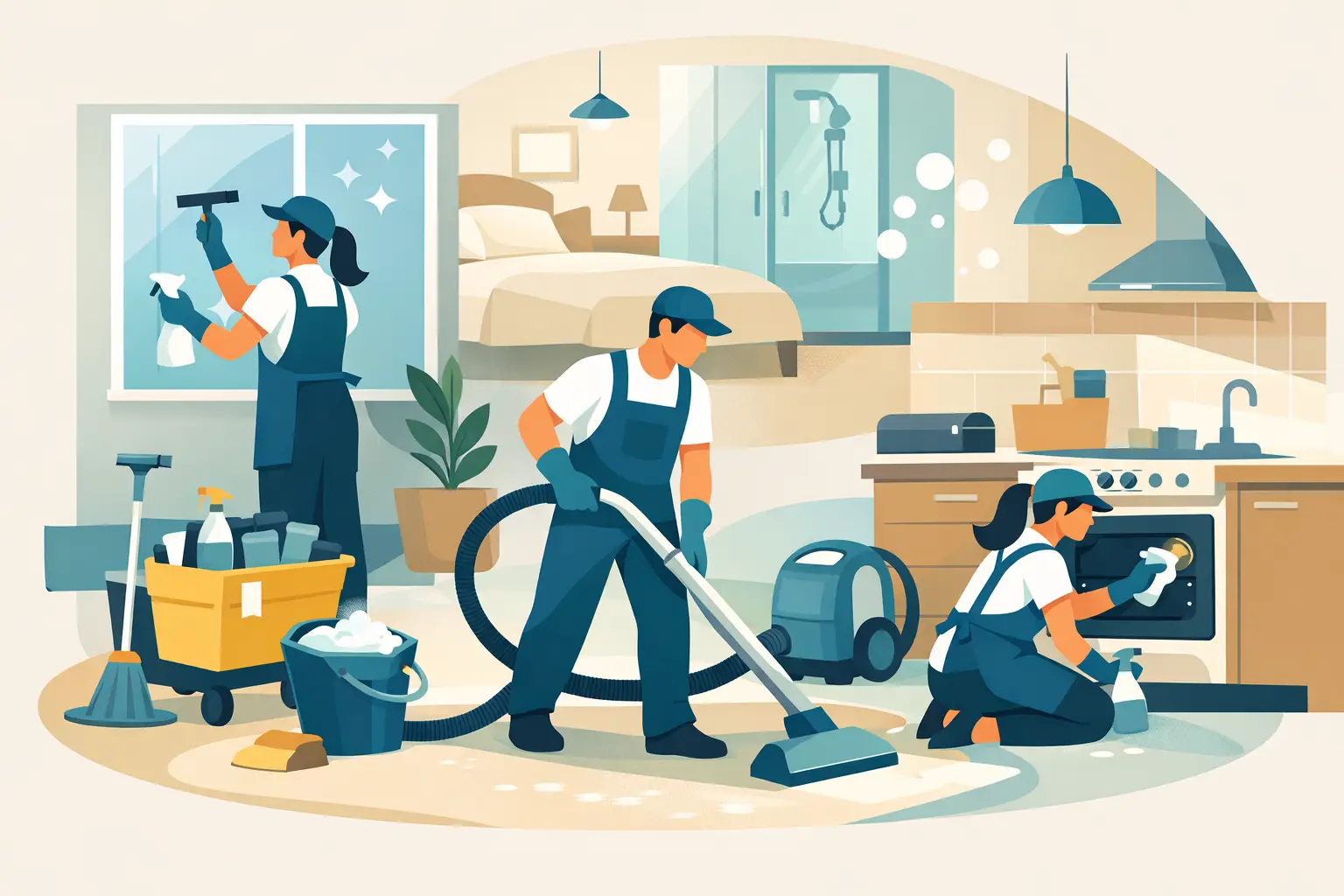
The difference usually shows up in the places people stop noticing. Grease on cupboard tops, limescale around taps, dust behind furniture, grime on skirting boards, fingerprints on doors, and a kitchen that looks tidy until you get close. That is where deep cleaning services for homes earn their value. They go beyond surface-level tidying and focus on the dirt that builds up over time, especially in busy households, rented properties, and homes between life changes.
For many customers, the question is not whether a home needs a deeper clean. It is whether a standard clean is enough, how much detail is included, and when it makes more sense to book a specialist service. If you are trying to get a property back under control, prepare for guests, reset after building work, or sort out a rental before handover, the answer is often straightforward. A deep clean gives you a proper reset.
What deep cleaning services for homes actually cover
A regular domestic clean is designed for upkeep. It helps maintain a decent standard week to week, but it usually works around visible surfaces and everyday tasks. A deep clean is more intensive. It is built to tackle neglected areas, stubborn dirt, and jobs that do not fit neatly into a fast maintenance visit.
That often includes detailed attention in kitchens and bathrooms, where grime tends to build fastest. In a kitchen, a deep clean may involve degreasing tiles, wiping cupboard fronts thoroughly, cleaning around appliances, sanitising worktops, and dealing with hard-to-reach dust and crumbs. In bathrooms, the focus is often on limescale, soap residue, mould spots, grout, and fixtures that need more than a quick wipe.
Elsewhere in the home, a deep clean can cover skirting boards, internal glass, door frames, switches, handles, radiators, reachable vents, and the edges and corners where dust collects. Some bookings also include inside cupboards, inside windows, or internal appliance cleaning, depending on the service selected. That is why it helps to check scope before the appointment rather than assume every provider includes the same tasks.
When a deep clean makes sense
There are obvious moments when deep cleaning services for homes are worth booking. Moving in is one of them. Even if a property looks acceptable on viewing day, it can still carry dust, residue, odours, and grime left by previous occupants. A deep clean before unpacking is usually easier than trying to clean around furniture later.
Moving out is another common case, especially for renters trying to leave a property in good order. A standard clean may not touch the marks, built-up grease, and bathroom scaling that often become issues during inspections. If the goal is to present the property properly, more detailed cleaning is usually the safer choice.
It also makes sense after renovations or repair work. Even minor jobs can leave behind fine dust that settles on ledges, inside corners, and across surfaces you would not expect. After builders cleaning is often a separate service because the clean-up is more specific, but some households first realise they need a deep clean when standard wiping simply moves dust around.
Then there is the less dramatic reason: the home has drifted. Work gets busy, children make chaos, flat shares get inconsistent, and weekly upkeep stops being enough. In that situation, a deep clean is less about perfection and more about getting the space back to a manageable baseline.
What to expect on the day
A good deep cleaning appointment should feel structured, not vague. The cleaner or cleaning team should have a clear scope, enough time for detail, and a logical order of work. That matters because deep cleaning is not just regular cleaning done more quickly with stronger products. It is slower, more methodical, and focused on areas that need extra labour.
How long it takes depends on the size and condition of the property. A one-bedroom flat that is lived in but generally maintained will be a different job from a family house that has gone months without proper attention. The more built-up dirt there is, the more time the clean needs. This is one of the main trade-offs customers should keep in mind. Faster bookings may cost less upfront, but if the time allowed is unrealistic, the result may feel partial.
It also helps to prepare the space. Deep cleaning works best when surfaces can be accessed easily. That does not mean the property needs to be spotless first, but general clutter should be reduced if possible. Clothes on floors, crowded worktops, and packed rooms slow down progress and limit what can be cleaned properly.
How deep cleaning differs from other specialist cleaning
People often use cleaning terms interchangeably, but the service type matters. Deep cleaning is broad and domestic. It is designed to refresh the whole home or key rooms in more detail than a routine clean.
End of tenancy cleaning is usually more checklist-driven and tied to the standards expected at move-out. It may include inside appliances, cupboards, and more intensive detailing because the property is empty or nearly empty. After builders cleaning focuses on dust, residue, and post-work debris. Airbnb cleaning is geared towards fast turnaround, presentation, and consistency between guests.
There can be overlap between these services, but they are not identical. If you book the wrong one, you may still get a decent clean, but the priorities may not match what you actually need. This is where a structured booking platform helps. It is easier to choose the correct category when service labels are clear and expectations are set upfront.
How to choose a provider without wasting time
For most people, the best cleaning service is not the one with the longest description. It is the one that makes booking and follow-up simple, gives a realistic scope of work, and provides confidence that the cleaner will actually turn up prepared.
Look for clarity first. You should be able to see what type of cleaning is offered, how bookings are managed, and whether there is support if something needs to be resolved afterwards. Vetted cleaners matter, but so does the system around them. Booking history, payment management, service tracking, and clear communication reduce friction in a way that matters just as much as the clean itself.
This is especially relevant in a city where schedules are tight and access can be awkward. If you are balancing work, travel, key handovers, tenants, or guest check-ins, convenience is not a bonus feature. It is part of the service. That is one reason platforms such as Letusclean4u appeal to customers who want one place to book, manage, and repeat specialist cleaning without chasing quotes every time.
Common mistakes people make when booking
One of the biggest mistakes is underestimating the condition of the property. Many customers describe a home as needing a deep clean when it really needs a more specialist service, or they assume a few hours will cover jobs that require much longer. Being realistic at the start usually leads to a better result than trying to fit the job into the smallest possible booking.
Another mistake is assuming every provider includes extras as standard. Oven cleaning, carpet cleaning, interior windows, upholstery, and inside appliances are often treated separately. If those items matter to you, ask before booking.
The last issue is timing. Deep cleaning is often booked reactively, after a deadline has already become tight. If you need the property ready for an inventory check, new tenants, guests, or family visiting, leaving no margin for delays can create avoidable stress.
Is a deep clean worth it?
If the home only needs a quick refresh, probably not. A standard clean is often enough for properties that are already being maintained well. But if the dirt is layered, the rooms feel stale, or you are trying to reset the property for a specific reason, deep cleaning is usually the more efficient option.
It saves time in the long run because it deals with the build-up that routine cleaning keeps skirting around. It can also make regular cleaning more effective afterwards. Once grease, limescale, dust, and hidden grime have been removed properly, ongoing maintenance becomes simpler and quicker.
The useful way to think about it is not as a luxury service, but as a reset point. Some homes need that reset seasonally. Others need it before a move, after an event, or when life has simply got ahead of the cleaning. If your home looks fine at first glance but not on closer inspection, that is usually the signal. Book the level of cleaning that matches the reality, not the version you hope the property is in.