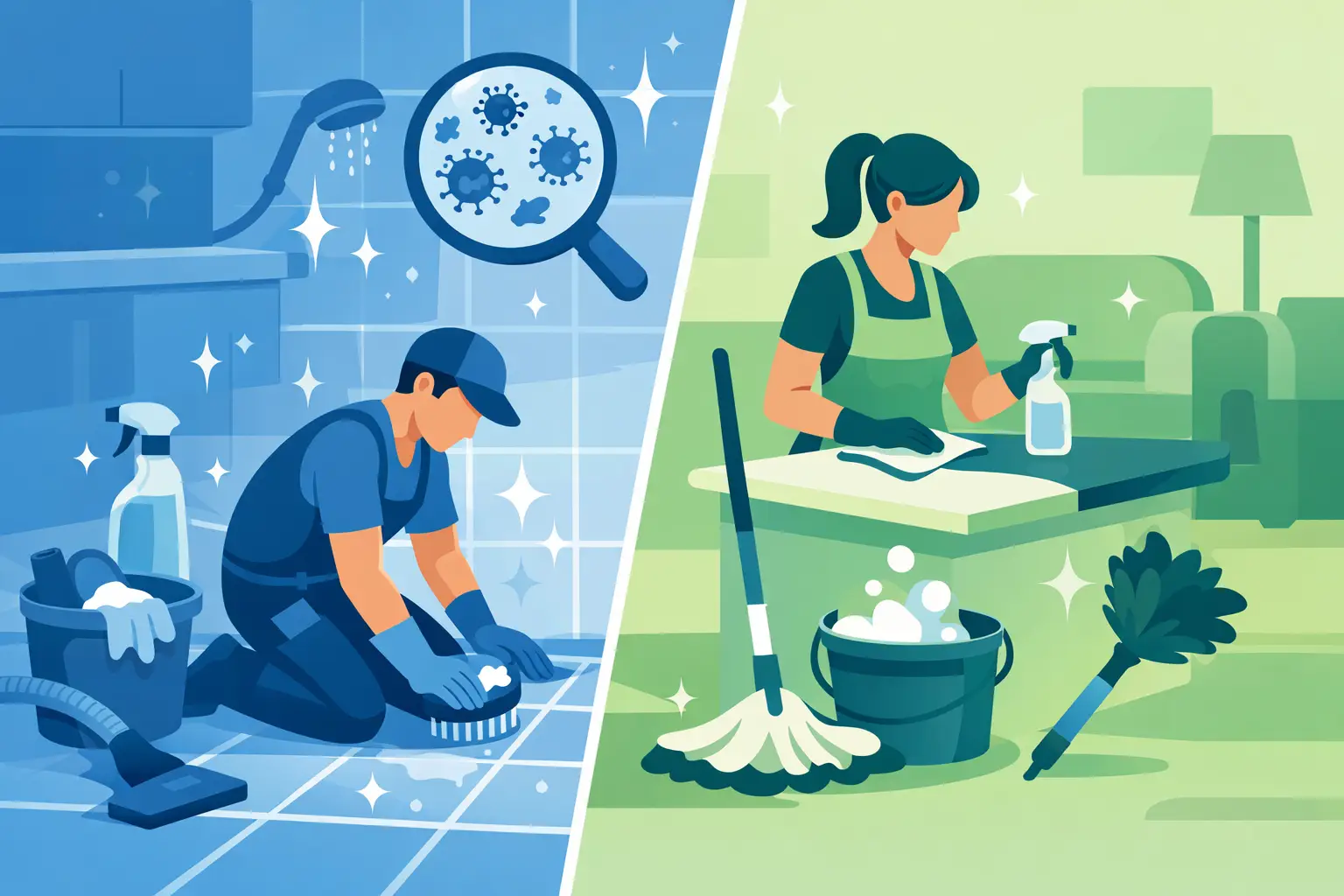
If your kitchen looks fine at a glance but the extractor is sticky, the skirting boards are dusty and the bathroom grout has changed colour, you are already dealing with the difference between deep cleaning vs regular cleaning. One keeps a space under control. The other tackles the dirt, build-up and neglected areas that routine cleaning does not fully cover.
For busy households, renters, landlords and hosts, choosing the wrong service usually means paying for a clean that does not match the job. That is where confusion starts. Regular cleaning sounds like the default option, but it is not always enough. Deep cleaning sounds thorough, but it is not always necessary every week. The right choice depends on the condition of the property, how it is used and what result you need.
What deep cleaning vs regular cleaning really means
Regular cleaning is maintenance cleaning. It is designed to keep your home, flat or business space presentable and hygienic on an ongoing basis. That usually means wiping surfaces, vacuuming, mopping floors, cleaning bathrooms, tidying visible dust and keeping kitchens in workable condition. It focuses on the areas you use every day and the dirt you notice quickly.
Deep cleaning goes further. It targets hidden grime, built-up grease, stubborn limescale, trapped dust and areas that are often skipped during routine visits because they take more time and more detailed attention. It is less about upkeep and more about reset.
The simplest way to think about it is this: regular cleaning maintains a clean space, while deep cleaning restores one.
What is included in regular cleaning?
A regular clean is usually built around repeatable tasks that can be completed efficiently on a weekly, fortnightly or monthly basis. In most homes, that means floors are vacuumed and mopped, worktops are wiped down, sinks and taps are cleaned, toilets and showers are sanitised, mirrors are polished and general dusting is done on reachable surfaces.
In a living room or bedroom, regular cleaning often covers visible surfaces, floors, light straightening and bin emptying. In kitchens, it usually focuses on external surfaces rather than detailed degreasing behind or inside appliances. The goal is practical upkeep, not a top-to-bottom overhaul.
That is why regular cleaning works well for people who already have a decent baseline of cleanliness and want help staying on top of it. Busy professionals, families, shared households and small offices often benefit most from this type of service because the main problem is not extreme dirt - it is lack of time.
What is included in a deep cleaning service?
Deep cleaning is more detailed and more labour-intensive. It commonly includes everything found in a regular clean, but with extra focus on neglected, hard-to-reach or heavily soiled areas. Think limescale removal around taps and shower screens, scrubbing grout, cleaning skirting boards, wiping door frames, removing grease from kitchen surfaces, cleaning inside cupboards if required, and paying closer attention to corners, edges and fixtures.
In many cases, a deep clean also includes detailed bathroom sanitisation, internal window cleaning where accessible, dust removal from areas that are not part of routine maintenance, and more time spent on built-up dirt around appliances. If a property has not been professionally cleaned for some time, deep cleaning is often the more realistic starting point.
This is also why pricing and timings are different. Deep cleaning takes longer because cleaners are not just maintaining the current standard - they are improving it.
Deep cleaning vs regular cleaning: when regular cleaning is enough
Regular cleaning is the right fit when the property is already in reasonable condition and you need ongoing support rather than recovery work. If your floors are cleaned regularly, bathrooms are not heavily stained and the kitchen does not have layers of grease, a routine service is often enough to keep things manageable.
It also suits homes with a stable pattern of use. If you work long hours, have children, or simply do not want to spend your weekend cleaning, a recurring service can prevent dirt from building up to the point where a deep clean becomes urgent.
For landlords or hosts, regular cleaning can also make sense between bookings or during lower-intensity occupancy, provided the property is not being handed over after heavy use. The trade-off is simple: regular cleaning is efficient and cost-effective, but it assumes the space is already being looked after at a basic level.
When a deep clean makes more sense
A deep clean is usually the better option at transition points or after neglect. Moving in is a common example. Even if a property looks tidy, you may not want to rely on surface-level cleanliness from the previous occupant. The same applies before a tenancy ends, after renovation work, after illness, before guests arrive for a longer stay, or when a property has gone without proper cleaning for months.
It is also worth booking a deep clean if you have tried to keep up with chores but certain areas never really come clean. Bathrooms with persistent limescale, kitchens with grease build-up and rooms with ingrained dust often need more than a standard visit.
For commercial settings, short-let properties and restaurants, a deep clean can help reset standards before routine maintenance takes over again. In practice, many people need both services at different times rather than choosing one forever.
The biggest mistake people make
The most common mistake is booking regular cleaning for a property that actually needs deep cleaning. This often happens because people focus on how the space looks rather than how it has been maintained. A room can appear tidy but still have months of dust, grease and bacteria in the places that matter most.
The opposite also happens. Some customers book a deep clean when what they really need is regular recurring support. If the property is already in good condition, paying for an intensive service too often may not be the best use of your budget.
Being clear about the outcome helps. If you want a property brought back to a higher standard, choose deep cleaning. If you want that standard maintained with minimal effort on your side, choose regular cleaning.
How cost and timing usually differ
Regular cleaning is generally cheaper per visit because it follows a predictable routine. The cleaner can work through standard tasks efficiently, especially on a repeat booking. It is designed for consistency.
Deep cleaning costs more because it requires extra time, more effort and often more detailed work in specific problem areas. That does not mean it is poor value. In the right situation, it saves time and prevents frustration because it deals with issues that a normal clean will not fix.
Timing matters too. A regular clean may fit neatly into your week or fortnight. A deep clean is better treated as a planned service, particularly before move-in dates, guest arrivals, inspections or handovers. If time is tight, booking the right service first time matters.
How to choose the right service for your property
Start with the current condition of the space, not the service name. Ask yourself whether the property needs upkeep or recovery. If surfaces are mostly clean, floors are manageable and bathrooms are hygienic, regular cleaning is probably enough. If grime has built up, neglected areas are obvious or you need a full reset, deep cleaning is the better choice.
Then think about how the property is used. A family home with constant foot traffic may need regular cleaning more often. A rental property between tenants may need a deep clean before anyone new arrives. An Airbnb may need a mixture of turnaround cleaning and occasional deeper work to stay at standard.
If you are unsure, the practical approach is to start with a deep clean and then move to a regular schedule. That gives you a cleaner baseline and makes future maintenance easier. For many customers using a booking platform such as Letusclean4u, that is the most efficient route because it reduces repeat issues and helps match the service to the real condition of the property.
Which one should you book first?
If you have not had professional cleaning for a while, book a deep clean first. It creates a proper starting point. After that, regular cleaning is far more effective because cleaners are maintaining a better standard rather than trying to catch up every visit.
If you already keep your home or workplace in good shape and just need reliable help staying on top of it, go straight to regular cleaning. You will spend less, your space will stay consistent and you can avoid the cycle of letting things slip until they need a major reset.
The best cleaning service is not the most intensive one. It is the one that fits the real condition of your space and the way you live or work. Book for the job you actually have, and cleaning becomes much easier to manage.