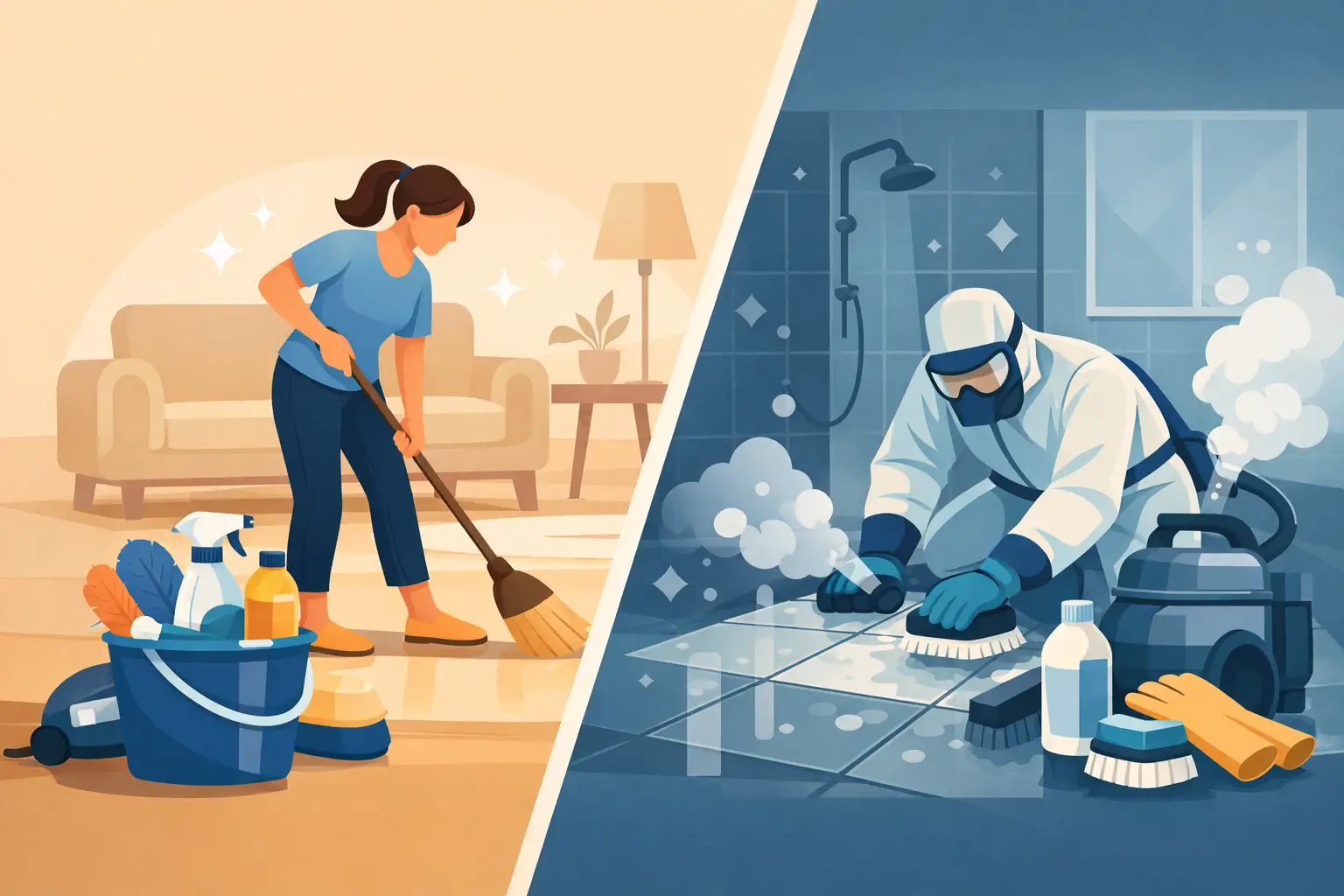
A kitchen can look tidy at 8am and still need far more than a quick clean. Worktops may be wiped, the floor may be vacuumed, and the bathroom may pass a glance test, but grease behind the hob, limescale in hidden corners, and dust built up along skirting boards tell a different story. That is where domestic cleaning versus deep cleaning becomes a practical decision, not just a wording difference on a booking page.
For busy households, renters, landlords and hosts, choosing the right service matters because it affects cost, timing and results. Book too light a service and the property may still feel neglected. Book too much and you may pay for time you do not need. The useful question is not which one is better. It is which one fits the condition of the property and the outcome you need.
What domestic cleaning usually covers
Domestic cleaning is the regular upkeep that keeps a home presentable and manageable. It is built around repeatable tasks rather than restoration. Think vacuuming, mopping, wiping surfaces, cleaning bathrooms, tidying kitchens, taking care of dust on reachable areas, and emptying bins.
In most homes, this is the service that prevents mess from turning into a larger problem. If booked weekly, fortnightly or on another routine basis, it helps keep hygiene standards steady without disrupting your schedule. For many people, especially professionals balancing work and commuting, domestic cleaning is less about perfection and more about staying on top of the basics.
That matters because regular cleaning creates consistency. Floors are maintained, bathrooms do not get out of hand, and everyday dust is dealt with before it spreads. It is usually the right fit for occupied homes that are already in fair condition and simply need upkeep.
What deep cleaning involves
Deep cleaning is more detailed and more intensive. It goes beyond visible surfaces and focuses on the dirt, grease, dust and grime that build up over time in neglected or hard-to-reach areas. This often includes descaling bathrooms, cleaning behind and under furniture where accessible, removing built-up grease in kitchens, paying attention to skirting boards, door frames, switches, tiles, grout, internal glass, and other places that standard cleans may touch lightly or not cover at all.
A deep clean is usually booked when a property has fallen below the level that routine cleaning can realistically fix in one visit. It is also common before or after major life or property events, such as moving in, preparing for guests, resetting a rental property, or dealing with the aftermath of renovation dust.
The difference is not only the task list. It is the objective. Domestic cleaning maintains. Deep cleaning resets.
Domestic cleaning versus deep cleaning: the real difference
The clearest way to understand domestic cleaning versus deep cleaning is to look at frequency, intensity and purpose.
Domestic cleaning is regular and preventative. It is designed to keep the home in working order. Deep cleaning is occasional and corrective. It is designed to bring the property back to a much higher standard when normal cleaning is no longer enough.
Time is another major difference. A domestic clean tends to focus on the main living areas and priority tasks within a practical time window. A deep clean usually takes longer because cleaners spend more time on detail work, tougher residue, and areas that are not part of a standard maintenance routine.
There is also a difference in expectation. If you book a domestic clean for a flat that has not been properly cleaned in months, the result may still feel disappointing, even if the cleaner has done the booked service properly. That is not a failure of the cleaner. It is usually a mismatch between service type and property condition.
When domestic cleaning is the right choice
If your home is already reasonably tidy and hygienic, domestic cleaning is often the sensible option. It works well for households that want regular support without overcomplicating things. You may need help staying on top of floors, bathrooms, kitchen surfaces and general dust, but not a full top-to-bottom reset.
It is also the more practical service if you want ongoing help. A routine booking can reduce the pressure of weekend cleaning and make the home easier to manage day to day. For many city households, that is the main value - less time spent catching up and more control over the space.
Domestic cleaning suits occupied properties where people are living normally, cooking regularly and creating the usual weekly mess. It is not built for severe build-up, but it is very effective at preventing it.
When deep cleaning makes more sense
Deep cleaning is the better choice when the home looks clean at first glance but clearly needs attention beneath the surface. If you can see soap scum that has been there for months, grease around kitchen units, dust around edges, marked doors, or grime in corners, a standard clean will rarely be enough.
It also makes sense at transition points. A new tenancy, a property handover, an Airbnb reset after heavy use, or the first clean after building work all call for a more thorough approach. In those situations, the goal is not maintenance. It is bringing the space back to a reliable baseline.
For landlords and property managers, this is especially relevant. A routine domestic clean between occupancies may leave obvious detail issues untouched. A deep clean is more likely to deal with the standard tenants, guests or inventory checks will actually notice.
Cost, time and value
One reason people hesitate between the two is price. Domestic cleaning is usually less expensive per visit because it is lighter, quicker and easier to repeat. Deep cleaning costs more because it demands more labour, more detail, and often more time on difficult areas.
But cheaper is not always better value. If a property genuinely needs deep cleaning, booking a domestic clean first can become a false economy. You may still need a second booking, and the space may not reach the condition you wanted.
At the same time, deep cleaning is not always the efficient choice. If your home is already well maintained, paying for a full intensive service may not give you much extra benefit. In that case, regular domestic cleaning keeps standards high at a lower ongoing cost.
The best value usually comes from matching the service to the actual condition of the home, not the ideal version of it.
Common situations where people choose the wrong service
A frequent mistake is underestimating build-up. Daily life makes gradual dirt easy to ignore, especially in bathrooms and kitchens. People often assume a regular clean will sort everything out, then feel frustrated when limescale, grease or ingrained dust remain.
Another mistake is treating all properties the same. A one-bedroom flat occupied by one person may only need regular domestic cleaning. A family home with pets, heavy cooking, or months without professional help may need a deep clean first, followed by maintenance visits.
There is also the issue of timing. If you are preparing for guests, an inspection, or a move, leaving the decision too late can limit your options. More intensive cleaning usually needs more time, and realistic expectations matter.
How to decide before you book
Start with the current state of the property, not the service name. Ask yourself whether the issue is ongoing upkeep or accumulated neglect. If the surfaces are mostly clean and the home just needs routine attention, domestic cleaning is likely enough. If dirt has built up in corners, on fittings, around appliances or across neglected areas, deep cleaning is usually the better fit.
It helps to think room by room. Bathrooms and kitchens often reveal the answer quickly. Fresh surfaces with minor daily use point towards domestic cleaning. Built-up limescale, grease, staining and detail grime point towards deep cleaning.
You should also consider what happens next. If you want the property kept in good condition long term, a deep clean followed by regular domestic cleaning often works better than repeating standard cleans on a home that never quite gets fully reset.
For people who want a straightforward booking process, especially across different property types and schedules, using a platform such as Letusclean4u can make that choice easier because the service categories are clear and built around actual cleaning needs rather than vague labels.
The smarter way to think about cleaning services
The better comparison is not light clean versus heavy clean. It is maintenance versus recovery. Once you see it that way, the decision becomes simpler.
Domestic cleaning helps you stay in control of your space. Deep cleaning helps you regain control when standards have slipped or when a property needs a stronger reset. Both matter, and many homes need both at different points in the year.
If you are unsure, be honest about the condition of the property rather than the budget you hoped for. Booking the right service first usually saves time, avoids repeat visits, and gets the result you actually want. A clean home is easier to manage when the service matches the job.