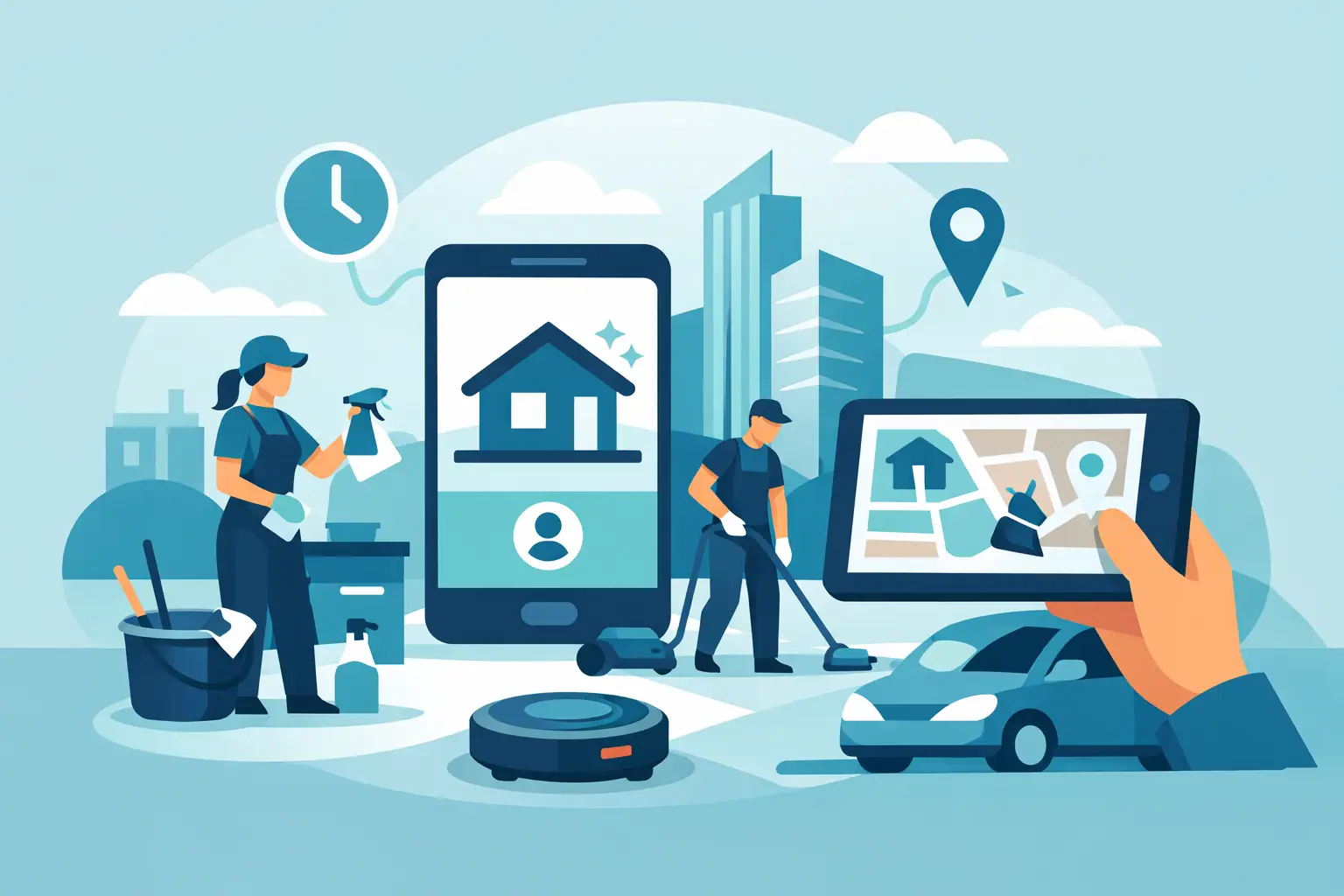
A missed cleaner, a last-minute guest check-in, or a tenancy handover moved forward by 24 hours - these are the moments that show where the future of on demand cleaning is heading. Customers are no longer comparing cleaning services only on price. They are comparing speed, visibility, flexibility and whether the booking process fits around real life.
For busy households, landlords, hosts and businesses, cleaning is becoming less of a one-off task and more of an operational service. That shift matters. It changes what people expect from a provider, how bookings are managed, and which businesses will keep customers coming back.
What the future of on demand cleaning looks like
The future of on demand cleaning will be shaped by one simple expectation: customers want less friction. They want to book quickly, know what they are getting, see when the job is scheduled, and sort changes without chasing multiple people by phone or email.
That means the strongest platforms will not just offer cleaning. They will offer control. A clean home or workplace is still the outcome, but the customer experience around that outcome is becoming just as important. Booking dashboards, service history, payment management, cleaner details and issue resolution are no longer nice extras. They are part of the service itself.
This is especially true in cities where schedules change fast. A professional who needs a same-week domestic clean, an Airbnb host managing back-to-back stays, or a restaurant dealing with strict hygiene demands will usually choose the option that is easiest to arrange and easiest to manage after booking.
Convenience will keep driving demand
On-demand cleaning grew because it solved a practical problem. People needed reliable help without long lead times or complicated quoting. That part is not changing. What is changing is the level of convenience expected.
Customers now want immediate confirmation where possible, clear service categories and fewer vague promises. A platform that offers domestic cleaning, end of tenancy cleaning, after builders cleaning, oven cleaning or commercial cleaning in one place has an advantage because people often do not have one fixed need. They have changing needs across the year.
A tenant may book a standard clean one month and an end of tenancy clean later. A landlord may need deep cleaning between occupants, then a bin clean or communal area clean. A small business may start with occasional support and move to recurring visits. The more easily a platform handles those shifts, the more useful it becomes.
There is a trade-off, though. Greater convenience can create higher customer expectations around availability and response times. Businesses that promise instant service across every category without the operational capacity to deliver it will struggle. The future belongs to providers that match convenience with structure.
More specialisation, not less
One of the biggest shifts in the future of on demand cleaning is specialisation. Many customers no longer want a general cleaner for every situation. They want the right cleaner, with the right tools and the right scope, for the specific job.
That matters because a weekly domestic clean is not the same as an after builders clean. Airbnb turnaround cleaning is not the same as restaurant cleaning. End of tenancy work has its own standards, deadlines and pressure points. As demand grows, customers will continue to favour platforms that make these distinctions clear rather than bundling everything under one vague service label.
This trend also benefits cleaner matching. Better service categorisation can improve job allocation, reduce misunderstandings and lead to more consistent outcomes. It is better for the customer and better for the cleaner.
In practical terms, this means service menus will become more detailed, not simpler. Customers will likely see clearer inclusions, optional add-ons and more transparent differences between cleaning types. That extra clarity reduces complaints and helps people book with more confidence.
Technology will matter most in the background
When people talk about technology, they often focus on what looks impressive. In cleaning, the most useful technology is usually less visible. Customers do not necessarily want novelty. They want a smoother process.
That is why the future of on demand cleaning is likely to be shaped by practical platform features rather than flashy tools. Smart scheduling, automated reminders, digital payments, cleaner availability matching, booking history and service tracking all remove friction. They save time for customers and reduce admin for providers.
There is room for more advanced tools too. Better route planning can help cleaners move between jobs more efficiently. Data from repeat bookings can help platforms predict peak demand. Customer accounts can make rebooking much faster, especially for recurring services or multi-property management.
But technology has limits. It can improve booking and coordination, yet it cannot fix poor service standards on its own. A good interface does not replace a vetted cleaner who arrives on time and completes the job properly. The strongest businesses will treat technology as support for service quality, not a substitute for it.
Trust will become more measurable
Trust has always mattered in cleaning, but it is becoming more specific. In the past, trust often came from word of mouth or a simple recommendation. Now it also comes from transparency.
Customers want to know who is attending, what happens if something goes wrong, how payments are handled and whether support is available after the booking is made. They look for signals that the service is organised, not improvised.
This is particularly relevant for customers handing over keys, arranging access while away, or managing a rental property remotely. In those cases, trust is not just about friendliness. It is about process. Clear communication, profile visibility, documented bookings and structured complaints handling all help reduce uncertainty.
For platforms, this creates a higher bar. It is no longer enough to say a service is reliable. Reliability has to show up in the booking journey, the support system and the consistency of fulfilment. Businesses that can provide that structure will stand out.
Recurring cleaning will grow alongside urgent jobs
On-demand does not only mean urgent. It increasingly means flexible. That is an important distinction.
Many customers want the freedom to book quickly when needed, but they also want the option to set up regular services without starting from scratch each time. This is why subscriptions, loyalty rewards and saved booking preferences are likely to play a bigger role.
For customers, recurring arrangements reduce admin and create consistency. For service providers, they improve retention and make demand easier to forecast. That does not mean every customer wants a subscription. Some will always need one-off support for a move, a renovation or a last-minute visit. But the line between on-demand and recurring service is becoming less rigid.
The businesses that do well will be the ones that support both. They will make repeat booking easy without trapping customers in a system that feels inflexible.
Urban demand will shape service expectations
In dense cities, customer expectations tend to rise first because everyday logistics are more complicated. Traffic, access restrictions, key handovers, short turnaround windows and borough-specific demand all affect cleaning operations.
That is one reason digital-first booking models are likely to keep growing. They are simply better suited to fast-moving schedules and varied property types. A customer managing a flat, a rental unit and a small office does not want three different processes for booking support.
In places like London, this creates a clear advantage for platforms that can offer broad coverage with multiple service categories under one system. That is more practical than forcing customers to search separately each time their needs change. Letusclean4u fits this shift well because the platform model is built around booking, managing and tracking different cleaning needs in one place.
Still, wider coverage brings operational pressure. Maintaining standards across a large area is harder than serving a small postcode cluster. The future will favour platforms that expand carefully and keep service quality consistent as they grow.
What customers should expect next
Customers will probably see faster booking flows, clearer service scopes and stronger self-service features. They should also expect more transparency around availability, pricing structure and post-booking support.
At the same time, not every improvement will be instant or universal. Specialist services may still need more notice than standard cleaning. Peak periods will continue to affect availability. And some jobs will always require a human review rather than a fully automated checkout. That is not a weakness. It is often the right approach when the job is complex.
What matters is that the process feels clear. Customers are generally willing to work within realistic limits if those limits are explained properly.
The future of on demand cleaning is not about turning cleaning into a novelty service. It is about making a necessary service easier to book, easier to trust and easier to fit into busy schedules. The businesses that win will be the ones that respect the customer’s time as much as the cleaning task itself. If a platform can do that consistently, it stops being a backup option and becomes part of how people run their homes, properties and businesses.