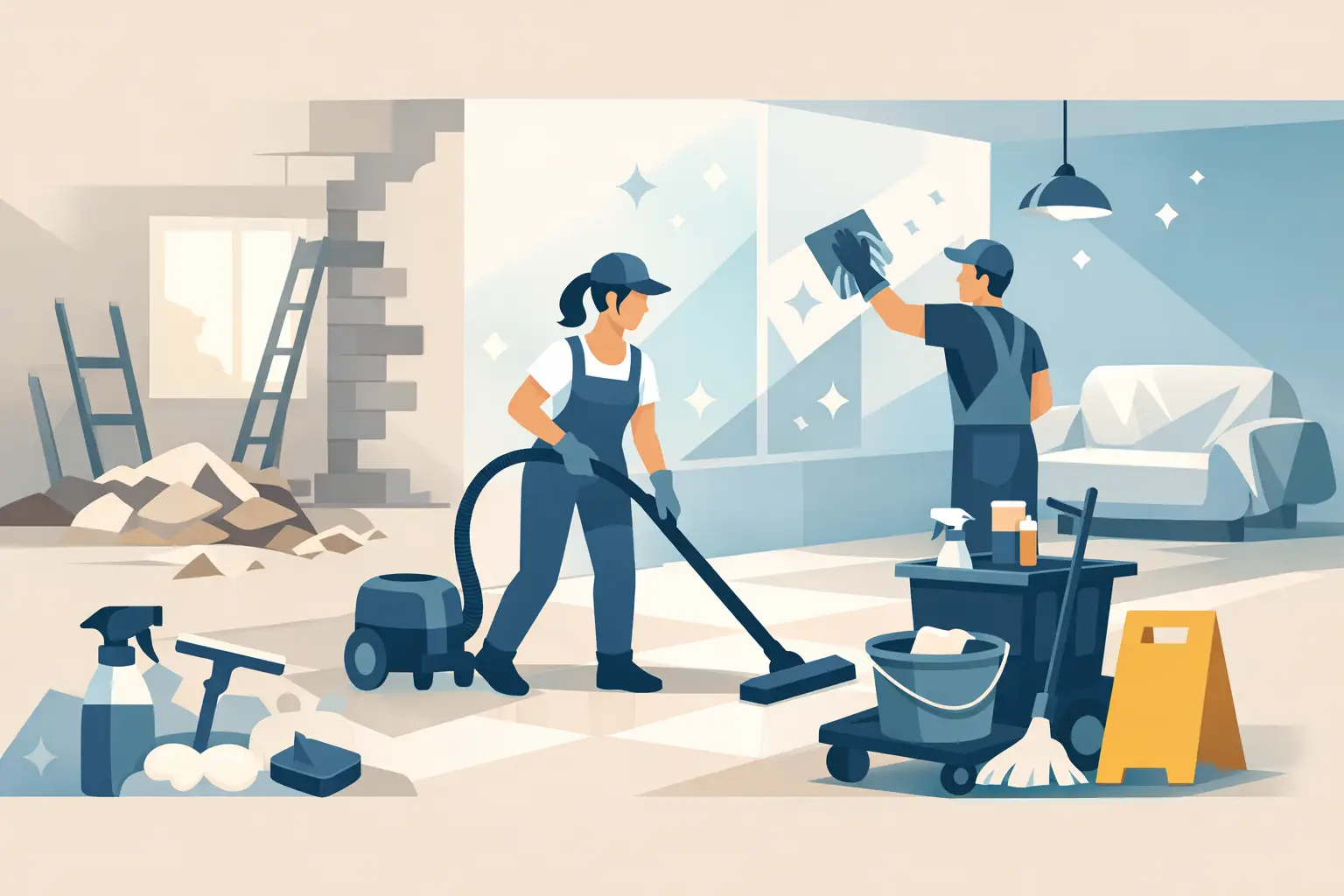
The job never really ends when the builders leave. What looks like a finished renovation often comes with a fine layer of dust on every ledge, grout haze on floors, paint specks on glass and bits of debris hiding in corners. If you are wondering how to clean after builders without wasting a full weekend or damaging new surfaces, the key is to work in the right order.
A proper post-build clean is less about scrubbing harder and more about controlling dust, protecting fresh finishes and knowing what should be tackled first. Whether you have had a kitchen refit, a loft conversion or smaller repair work done, the cleaning stage needs a method. Skip that, and you can end up moving dust around rather than removing it.
How to clean after builders without making more mess
The biggest mistake is starting with a mop and a spray bottle. Builders' dust is very fine, and once it gets damp too early, it can cling to surfaces and turn into a paste. Start dry, remove loose debris first, and only then move to wet cleaning.
Before you begin, open windows where possible for ventilation. Put on gloves and a dust mask, especially if the work was recent and the dust is still unsettled. Then gather what you actually need: heavy-duty bin bags, a vacuum with a good filter, microfibre cloths, a soft brush, a mop, a bucket and gentle cleaning solutions suitable for the surfaces in the property.
If there are offcuts, packaging, screws, nails or broken tiles left behind, clear those first. It sounds obvious, but trying to vacuum or mop around building waste slows everything down and can damage your equipment.
Start high and work down
Dust falls. That is why ceilings, tops of door frames, curtain rails, shelves and light fittings should be cleaned before floors. If you clean the floor first, you will only need to do it again.
Use a dry microfibre cloth or a vacuum with a brush attachment for higher surfaces. Be gentle around freshly painted areas. New paint can mark more easily than older finishes, even when it feels dry to the touch. If there are stubborn spots, test a small hidden area before using any stronger product.
Walls usually do not need full washing unless they have visible marks. In many cases, a light dusting is enough. Rubbing too hard can lift paint, especially after recent decorating work.
Deal with dust in stages
One pass is rarely enough after building work. Fine plaster and sawdust settle repeatedly, particularly around skirting boards, sockets, radiators and window sills. Vacuum first, then wipe surfaces, then vacuum again if needed.
This is where patience matters. A rushed clean can leave a room looking tidy at first glance, but once sunlight hits the surface, the dust is still there.
Cleaning floors after building work
Floors need different treatment depending on the material. Hard floors can usually be vacuumed and then cleaned with a damp mop, but only after all loose dust has been removed. Too much water is not ideal on wood, laminate or newly laid flooring, so keep the mop just damp rather than wet.
Tiles often need extra attention because grout dust and adhesive residue can sit on the surface even after sweeping. A pH-neutral floor cleaner is usually the safest option. Avoid anything too aggressive unless you know the tile finish can handle it.
Carpets are trickier. Builders' dust can work deep into the fibres, and a quick once-over with a standard vacuum may not be enough. Go slowly and make several passes in different directions. If the carpet has taken a lot of dust, paint flakes or foot traffic from the work, a deeper clean may be the better option.
Watch for scratches and residue
Do not drag rubble bags, ladders or cleaning buckets across new floors. Post-build cleaning is often when fresh scratches happen. If you spot paint marks, adhesive or plaster drops, do not attack them with a scraper straight away. The wrong tool can leave permanent damage.
Instead, soften the residue if appropriate for the surface, then lift it carefully. On delicate finishes, it is safer to use a plastic scraper and a manufacturer-approved product.
Windows, glass and frames need a separate pass
Glass tends to show every mark after building work. You may have dust, silicone smears, fingerprints, sticker residue or tiny paint spots all at once. Start by dry dusting the frame, sill and tracks so you are not turning grit into scratches.
Then clean the glass with a lint-free cloth and glass cleaner. If there are paint specks, be careful. Toughened glass and coated glass can scratch more easily than people expect. A blade might seem efficient, but it is not always the safe option. If you are unsure, leave the scraping out and use a gentler method.
Window tracks often get ignored, yet they collect some of the heaviest debris. Vacuum them thoroughly before wiping them down. The same goes for sliding door runners.
Kitchens and bathrooms need detail work
These rooms usually collect a mix of dust, grout residue and installation marks. In kitchens, start with the tops of cupboards, extractor covers and light fittings, then move to fronts, worktops and splashbacks. Open every cupboard and drawer. Builders' dust gets inside storage spaces more often than people expect.
Appliances should be wiped externally first and internally only if they were exposed during the work. If a new oven, hob or fridge has just been fitted, check the manufacturer's care guidance before using strong cleaners.
In bathrooms, pay attention to tile faces, grout lines, taps, shower screens and around sealant. White marks are often leftover dust or grout haze rather than limescale, so the cleaner you use matters. Acidic products can be too harsh on some new surfaces and natural stone in particular.
Check vents, fittings and edges
Extractor fans, towel rails, recessed lights and the tops of mirrors collect fine dust quickly. These smaller areas are often what make a room still feel unfinished after a clean. A careful wipe around edges and fittings can make a bigger difference than another pass over the obvious surfaces.
How to clean after builders in the final stage
Once every room has been cleaned, do a slow final check in daylight. This is when missed dust around plug sockets, behind doors, on skirting boards and along window frames becomes visible. It is also the best time to spot smears on mirrors and glass.
If the property has had major work, expect some dust to settle again over the next day or two. That does not always mean the clean was done badly. It is common after sanding, plastering and cutting materials indoors. Sometimes a follow-up clean is the most realistic option.
This is also where the scale of the job matters. A single-room refresh may be manageable on your own. A full house renovation, end of tenancy turnaround or commercial refit is different. More debris, more surface area and more specialist materials can make DIY cleaning slower and riskier.
When it makes sense to book after builders cleaning
There is a point where convenience matters as much as cost. If you are moving back in, preparing a rental, turning over an Airbnb or reopening a business space, speed and thoroughness matter. The cleaning has to be done properly, but it also has to fit around everything else you are managing.
Professional after builders cleaning is usually worth it when there is heavy dust throughout the property, paint and plaster residue on multiple surfaces, or a tight deadline. It can also make sense when the space includes delicate finishes that you do not want to damage with the wrong products or tools.
For busy households and property managers, booking through a platform such as Letusclean4u can simplify the process because you can arrange the right service without chasing quotes back and forth. That matters when the builders are done, the keys need handing over, or you just want the space usable again.
A clean property after building work is not about making it look good for ten minutes. It is about removing the dust properly, protecting the surfaces you have just paid for and making the space ready to live or work in. If you take it room by room and keep the order right, the job becomes far more manageable.