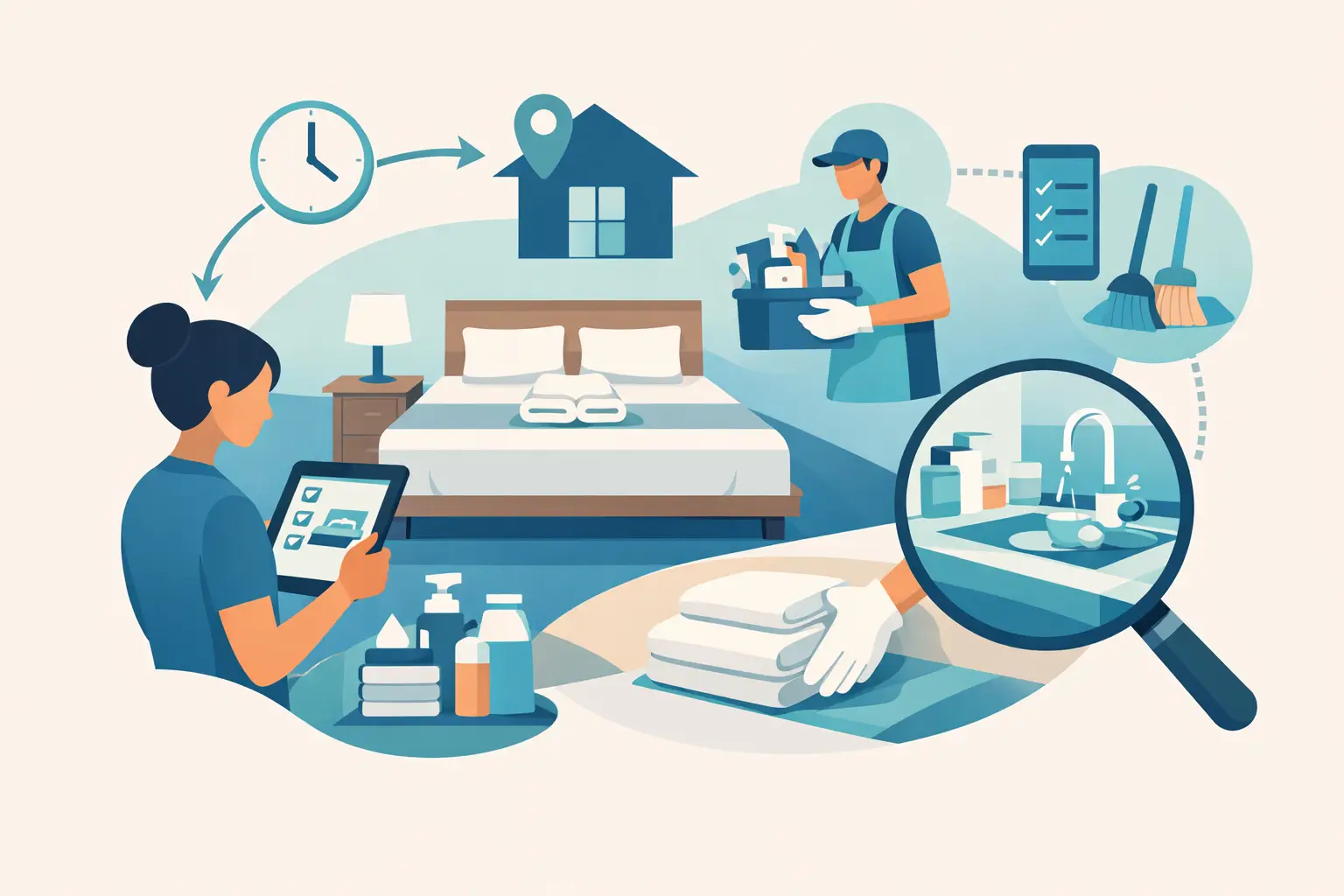
A 10am checkout and a 3pm arrival leave very little room for vague instructions. Knowing how to manage Airbnb turnovers means building a reliable handover process that covers cleaning, laundry, maintenance and guest communication - not simply arranging a cleaner after each booking. The aim is simple: every guest should enter a property that feels prepared for them, even when the previous stay ended only hours earlier.
How to manage Airbnb turnovers with a repeatable system
The most dependable turnovers follow the same sequence every time. Start by checking your booking calendar at least a week ahead, then review it again each morning. Flag same-day bookings, early check-in requests, late check-outs and bookings that need extra preparation, such as families requiring a travel cot or longer stays needing a fuller stock of supplies.
Avoid treating every changeover as identical. A one-night stay by two guests may need a quick but thorough reset. A week-long booking for six people may require extra linen, more rubbish removal and a longer inspection. Build realistic time into your schedule rather than assuming a cleaner can complete every property in the same slot.
For hosts with more than one listing, assign a clear order of priority. Same-day arrivals come first, followed by properties with a short turnaround window, then vacant homes that can be cleaned more flexibly. This prevents a minor task at one property from delaying a guest-ready handover elsewhere.
Set the handover window before you accept bookings
Your check-out and check-in times are operational tools, not just guest rules. A five-hour gap often works for a standard flat, but it may not be enough if linen is washed on site, access is difficult or the property has several bedrooms. Consider using a later check-in time on peak changeover days, particularly when you are still refining your process.
You also need a contingency plan. Guests sometimes leave late, cleaners can be delayed by transport and repairs do not always wait for a quiet day. Keep at least one backup cleaner or cleaning provider available, and hold spare linen off site where possible. The cost of this preparation is usually lower than the cost of a poor review or a refunded first night.
Build a cleaning brief that does not rely on memory
A generic instruction to clean the property is not enough. Create a room-by-room brief for each listing, with the same format every time. It should cover the kitchen, bathroom, bedrooms, living area, entrance and outdoor space, if applicable. Include details that are easy to miss, such as wiping inside the microwave, checking hair traps, cleaning remote controls and looking beneath sofas.
Your brief should also separate standard cleaning from host-specific tasks. Standard work includes vacuuming, mopping, sanitising surfaces, changing beds and removing rubbish. Host-specific tasks could include setting the thermostat, putting out a welcome pack, arranging cushions in a particular way or leaving keys in a lockbox.
Photographs help maintain consistency, especially when working with different cleaners. Use them to show how beds should be made, where consumables are stored and what the finished rooms should look like. A short visual reference is faster to follow than a long paragraph of instructions.
For repeat bookings, ask cleaners to report rather than repair. If they find a stained mattress protector, cracked mug, damaged blind or missing towel, they should photograph it and notify you promptly. That gives you time to decide whether it is normal wear, guest damage or an urgent replacement before the next arrival.
Do not leave laundry until the end of the clean
Laundry is one of the main causes of delayed turnovers. If bedding and towels are washed in the property, start the first load as soon as the cleaner arrives. However, this only works if the machine capacity and drying time match the volume of linen used by the property.
For busy listings, a linen rotation is often more practical. Keep at least three full sets per bed: one in use, one being cleaned and one ready to fit. White hotel-style linen can make replacements easier, although it may show stains sooner. Coloured towels can hide cosmetic marks but can make it harder to keep a consistent, premium look. The right choice depends on your guest profile, booking frequency and laundry arrangement.
Count towels, pillowcases and duvet covers after each turnover. Missing linen is easier to resolve when you notice it immediately, rather than after it has disrupted the next clean.
Check stock as part of every turnover
Guests notice the basics first: toilet roll, soap, tea, coffee, bin bags and clean towels. Make stock checks a fixed part of the cleaning brief rather than an occasional host task. Set minimum quantities for each item, then replenish when the level falls below that point.
A simple storage system saves time. Keep labelled containers for cleaning supplies, guest consumables, spare light bulbs and replacement items. If several people access the property, only one person should be responsible for updating the inventory or approving purchases. Otherwise, it is easy to over-order some items while running out of others.
Be careful not to provide supplies you cannot reliably replace. If you promise a particular coffee capsule, luxury toiletry or welcome treat, guests will expect it every time. A smaller, dependable offering is better than an inconsistent one.
Inspect the property before releasing check-in details
Cleaning completed does not always mean the property is ready. A final inspection should check presentation, safety and access. Walk through the flat as if you were arriving with a suitcase. Are the floors dry? Does the property smell fresh rather than heavily fragranced? Are lights working, beds properly made and surfaces free from dust, hair and streaks?
Test the essentials that can create an immediate guest complaint: Wi-Fi, hot water, heating or air conditioning, television remote, smoke alarms and key access. In London properties, also check communal entrances, lifts and any shared-bin arrangements. A spotless flat is still frustrating if the guest cannot get through the building door or find the correct refuse point.
For remotely managed listings, request timestamped completion photos. They should show each bedroom, bathroom, kitchen, living space and the entry area. Photos are not a replacement for trusted cleaners, but they provide a clear record and make it easier to spot an issue before a guest does.
Make communication short and operational
Send departing guests clear check-out instructions the day before they leave. Include the check-out time, where to place keys, rubbish guidance and what to do with used towels. Keep the message polite but specific. Vague wording creates unnecessary follow-up on the morning of a turnover.
Once the inspection is complete, send incoming guests their arrival details. Do not promise an early check-in until the property has passed its final check. If there is a delay, tell the guest early, give a realistic time and focus on the solution. Most guests can accept a short wait when communication is prompt and honest.
Your cleaners also need one channel for updates. Whether you use a shared dashboard, booking platform or dedicated message thread, avoid scattered instructions across personal texts, emails and calls. Every turnover should have the booking details, access instructions, task brief and issue reporting process in one place.
Use cleaning support that can scale with your calendar
Managing turnovers yourself may work for one occasional listing, particularly if you live nearby. It becomes harder when bookings overlap, you manage several properties or you cannot attend for quality checks. A professional Airbnb cleaning service can provide capacity and consistency, but only if the booking process, brief and communication standards are clear.
When comparing providers, look beyond the headline price. Confirm whether linen changes, laundry, restocking, rubbish removal, photo reporting and same-day availability are included or charged separately. A cheaper clean can become expensive if it leaves you arranging several additional tasks at short notice.
For London hosts, a bookable service with broad borough coverage can be useful when calendars change quickly. Letusclean4u can support scheduled Airbnb cleaning, while a documented property brief helps each booking follow the standard you expect.
Review each turnover and fix the recurring friction
The best process improves after real bookings. Keep a short record of delays, guest comments, missing items and maintenance problems. If the same issue appears more than once - slow laundry, insufficient drying space, confusing lockbox instructions or cleaners spending too long searching for supplies - change the system rather than repeatedly asking people to work around it.
A well-managed turnover should feel invisible to the guest. Behind the scenes, it is a controlled sequence of timed tasks, clear responsibilities and practical checks. Set that sequence up once, review it often, and each new booking becomes far easier to manage.