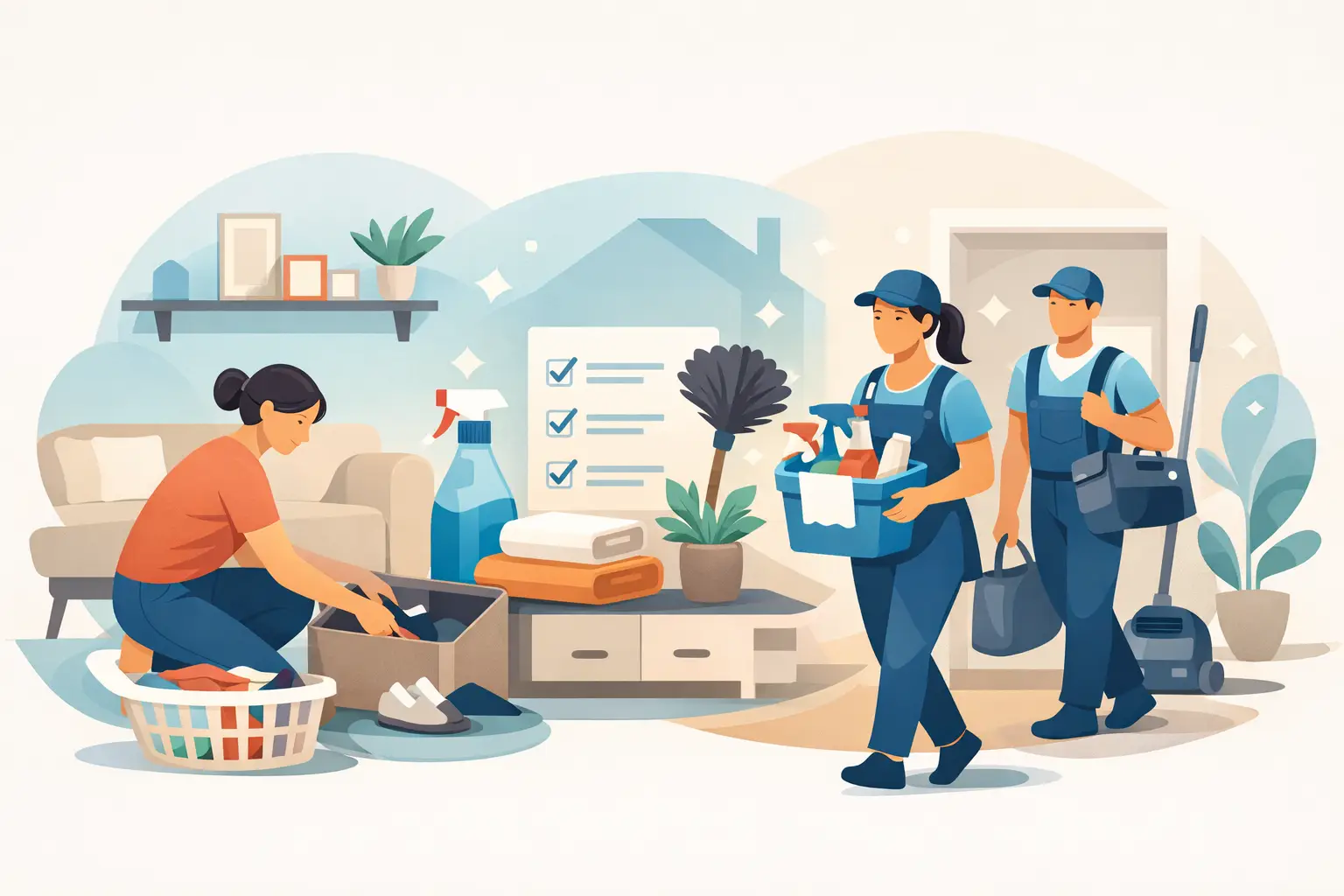
If your cleaner is due in an hour and the place somehow looks worse than it did yesterday, you are not alone. A lot of people book a cleaning service to save time, then wonder how to prepare for cleaners without spending half the morning doing the job themselves. The good news is that proper prep is not about pre-cleaning. It is about making the visit more efficient, avoiding confusion and helping the cleaner focus on the work you actually booked.
For busy households, renters, landlords and hosts, that distinction matters. A cleaner should be cleaning, not guessing which keys open which door, moving piles of laundry from room to room or trying to work around fragile items left on every surface. A few simple decisions before the visit can make the appointment quicker, smoother and better value.
How to prepare for cleaners without doing the cleaning
The easiest mistake is overdoing it. You do not need to vacuum before the cleaner arrives or scrub the bathroom to make a good impression. What helps is removing obstacles. Think access, clutter, instructions and anything that could slow the visit down.
Start with the basics. Make sure the cleaner can get in at the agreed time. In a flat block, that may mean sharing an entry code, answering your phone or arranging concierge access. If the booking is for a business, Airbnb turnover or end of tenancy clean, make sure the right person knows who is arriving and when.
Then do a quick reset of the space. Put away loose clothing, paperwork, toys and everyday clutter from floors and key surfaces. This is not because cleaners mind tidying. It is because cleaning around scattered items takes longer and usually means less time spent on detailed work. If a kitchen counter is covered in unopened post, shopping bags and charging cables, it cannot be cleaned properly.
Decide what you want cleaned first
Before the appointment, be clear about the purpose of the visit. A regular domestic clean is different from a deep clean. An end of tenancy booking has a different standard again. If you are preparing for after builders cleaning, some rooms may need to be avoided until dust settles or work is fully finished.
That is why the most useful prep is often not physical at all. It is setting priorities. If there is only a fixed booking window, decide what matters most. For one customer it may be bathrooms and kitchen. For another it may be high-traffic floors, skirting boards and dusting throughout. If you manage a rental property, it may be presentation areas that affect guest or tenant handover.
A short written note can help, especially if you will not be there in person. Keep it practical. Mention the rooms included, any areas to skip and anything unusual such as a stiff window latch, a delicate worktop or a pet that should not be let out.
If you have booked a specialist clean
Specialist services need more targeted preparation. For oven cleaning, empty the oven and remove trays if requested. For end of tenancy cleaning, make sure previous occupants have fully moved out. For Airbnb cleaning, leave enough clean linen available and make turnover instructions clear. For commercial or restaurant cleaning, confirm site access, alarm procedures and whether any parts of the premises must remain operational.
In other words, good prep depends on the service. The more specific the cleaning type, the more useful clear access and instructions become.
Secure valuables and personal items
Trust matters, and vetted cleaners should be treated with professionalism and clarity. Still, it is sensible to put away cash, important documents, jewellery and anything highly personal before the appointment. This is less about suspicion and more about avoiding awkwardness, misplaced items and unnecessary complaints later.
If there are rooms, drawers or cupboards you do not want accessed, close them and say so in advance. Clear boundaries are easier for everyone than assumptions. The same applies in offices or shared buildings where confidential paperwork or stock may be present.
For households with children, it also helps to move small breakable items out of easy reach if the cleaner needs to work quickly around shelves and side tables. You are not creating a showroom. You are reducing risk.
Make kitchens and bathrooms workable
The kitchen and bathroom usually take the most effort, so give the cleaner a fair chance to do them properly. Clear sinks of dirty dishes if dishwashing is not part of the booking. Put toiletries back in cupboards or trays rather than leaving every bottle around the basin and bath edge. Hang up wet towels or place them in the laundry basket.
This part is where customers often see the biggest difference between a rushed and an efficient appointment. If worktops, hobs, shower trays and toilet areas are accessible, the cleaner can get straight to the cleaning. If every surface needs to be emptied first, time gets lost.
That does not mean your home needs to be spotless before anyone arrives. It means the cleaning zones should be usable. A cleaner can remove limescale from a tap. They cannot do much with twenty products balanced around it.
Think about pets, children and working from home
A clean is easier when the environment is predictable. If you have pets, decide where they will be during the appointment. Some animals are relaxed around cleaners, while others get anxious, noisy or try to escape when doors open. Leave simple instructions if there are feeding routines, rooms to avoid or pets that must stay indoors.
If you work from home, plan around the visit. You do not necessarily need to leave, but it helps to avoid taking calls in the room being cleaned or moving constantly between spaces. If children will be at home, consider whether another room can be kept free so the cleaner can work in sections without interruption.
This is one of those areas where it depends on the job. A short regular clean may be easy to work around. A deep clean usually goes better with more space and fewer interruptions.
Check products, equipment and utilities if needed
Some cleaning services bring their own products and equipment, while others may rely on customer-provided supplies depending on the booking type. Check this before the day. If you are expected to provide a mop, vacuum or products, test that they are available and working.
It sounds obvious, but flat batteries, broken vacuum hoses and empty spray bottles can waste a surprising amount of time. If there are preferred products for certain surfaces such as stone, wood or stainless steel, leave them out with a quick note. If you do not want bleach used in a particular area, say so clearly.
Also make sure basic utilities are working. Hot water, electricity and safe access to sockets all affect what can be done during the visit. For commercial spaces or vacant properties, double-check this in advance rather than assuming everything is fine.
Before the cleaner arrives, do one final walkthrough
A five-minute walkthrough is usually enough. Pick up last-minute clutter, open curtains if useful, check access instructions and make sure bins, laundry and personal items are where they should be. If you have booked through a digital platform, confirm the booking details, timing and any service notes are correct.
This last check is also the moment to manage expectations. If there are problem areas such as mould, heavy limescale, paint splashes or neglected grease build-up, note them clearly. Some issues need extra time or a specialist service. A cleaner can achieve a lot in a standard booking, but not every long-term issue can be solved in one visit.
That is often where frustration starts - not with the quality of the clean, but with a mismatch between the booking and the condition of the property. A straightforward booking platform helps because you can choose the right service from the start, whether that is regular home cleaning, a deep clean, an after builders clean or a turnover clean for short-stay guests.
What not to do when preparing for cleaners
It helps to avoid two extremes. The first is doing nothing at all and expecting the cleaner to sort, tidy and deep-clean every room in a short session. The second is panic-cleaning before they arrive, which defeats the point of booking help.
A better approach sits in the middle. Remove clutter, secure personal items, give access and set priorities. That is enough for most bookings. You are not meant to perform for the cleaner. You are meant to make the service easier to deliver well.
If you book cleaning regularly, your prep usually gets quicker after the first visit. You learn what needs to be left out, what can stay put and how much can realistically be covered in the time. Services that let you manage bookings, notes and schedules in one place make that easier, especially if your needs change from week to week.
A cleaner’s time is most valuable when it is spent cleaning, not waiting, moving clutter or chasing missing information. Get the practical details right, and the whole visit tends to run better from the moment they arrive.