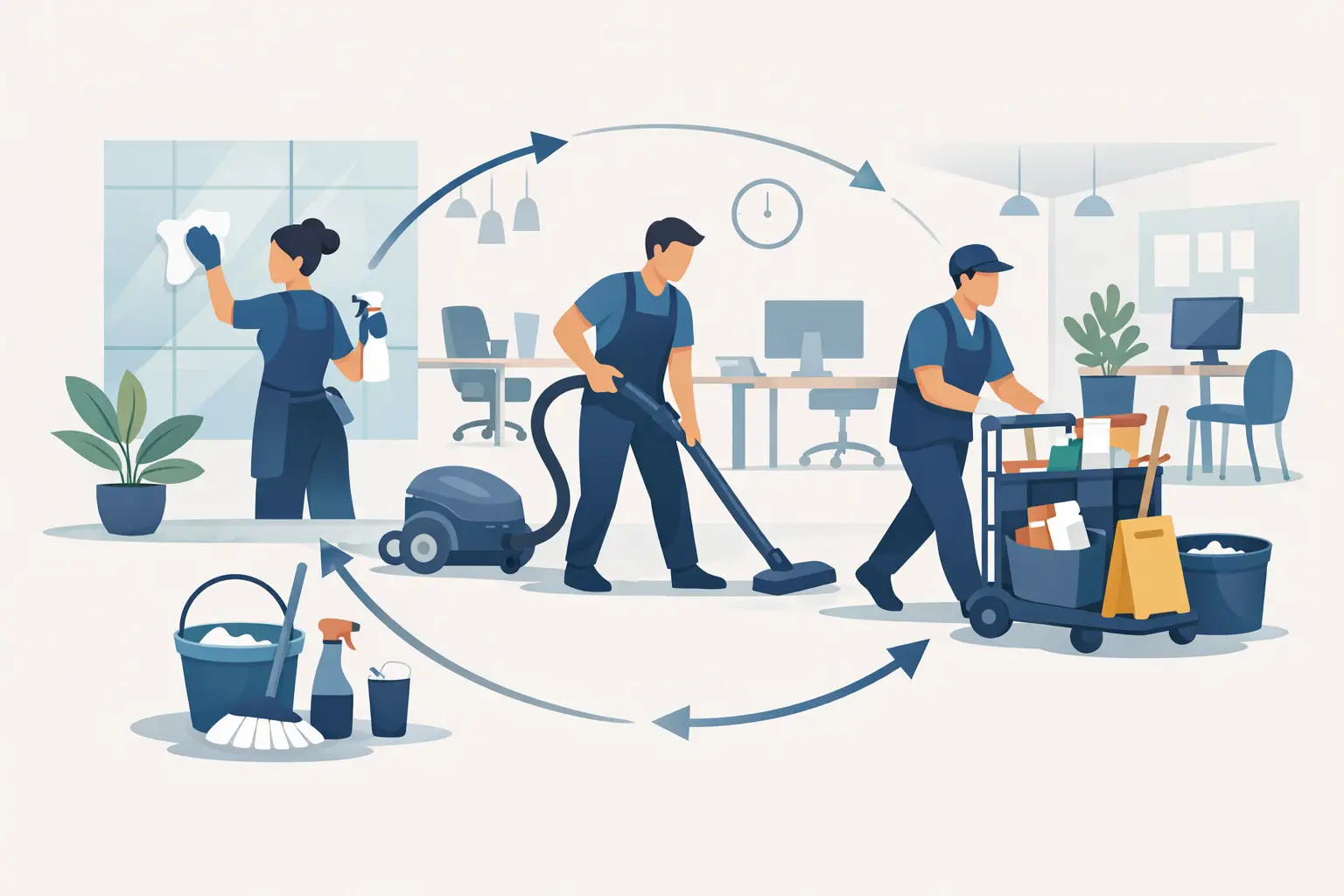
If your office only gets attention when bins overflow or the kitchen starts to smell, the problem usually is not effort. It is structure. A clear office cleaning workflow example gives everyone the same playbook, so cleaning happens on time, standards stay consistent, and nothing gets missed during busy periods.
For office managers, landlords, facilities teams and small business owners, that matters more than ever. Hybrid working has changed traffic patterns, but it has not reduced expectations. Staff still notice dusty desks, marked glass, dirty washrooms and neglected shared spaces. Clients notice them too. A workable cleaning routine is less about making a space look perfect all day and more about keeping hygiene, presentation and maintenance under control without wasting time.
What an office cleaning workflow example should include
A useful workflow is not just a task list. It should show what needs doing, when it happens, who is responsible, and how standards are checked. That sounds simple, but many offices stop at a generic checklist pinned in a cupboard. The result is uneven cleaning, duplicated effort and jobs that slip through the cracks.
A better setup breaks the work into frequency and priority. High-touch and hygiene-critical areas need daily attention. Lower-risk tasks can move to a weekly or monthly cycle. It also helps to split visible cleaning from preventive cleaning. Emptying bins and wiping counters are visible. Descaling taps, deep cleaning carpets and cleaning vents are preventive. Both matter, but they sit on different schedules.
The right workflow also depends on the type of office. A small serviced office with ten desks has different needs from a multi-floor workspace with meeting rooms, kitchenettes and heavy visitor traffic. If your office includes showers, breakout areas or shared tenancy spaces, the workflow needs to reflect that. One size rarely fits all.
Office cleaning workflow example for a typical working office
Here is a practical office cleaning workflow example for a standard office used by staff Monday to Friday. It assumes a reception area, open-plan desks, meeting rooms, washrooms and a kitchen.
Start with a site check
Before cleaning begins, the cleaner or supervisor does a quick walk-through. This takes a few minutes and sets priorities for the shift. Overflowing bins, spills, meeting room use, washroom condition and any obvious hazards are checked first. If there has been an event, client visit or unusually high footfall, that changes the order of work.
This first step matters because offices are not used evenly. Some days the kitchen takes the hit. On other days it is reception or the boardroom. A quick inspection stops the workflow becoming mechanical.
Daily cleaning tasks
Daily work should focus on hygiene, touchpoints and presentation. Reception and entrance areas are cleaned first if the office is already open, because they shape first impressions. Floors are vacuumed or mopped as needed, entrance glass is spot-cleaned, and visible dust or marks are removed.
Desks are handled carefully. In some offices, cleaners wipe only cleared desk surfaces for data protection and personal item reasons. In others, full desk cleaning is allowed. This needs to be agreed in advance. Shared desks, hot desks and touchpoints such as phones, switches and door handles should always be included.
Meeting rooms need a reset after use or at the end of the day. Tables are wiped, chairs straightened, bins emptied and any glass or screen smudges removed. If the rooms are used heavily, they may need an extra pass during the day.
Kitchens and tea points are usually the highest-risk areas. Counters, sinks, cupboard handles, appliance fronts and tables should be cleaned daily. Bins are emptied, liners replaced and floors mopped. If staff leave washing up behind, the policy needs to be clear. Cleaning teams can maintain hygiene, but they should not be expected to manage a kitchen that is constantly left in poor condition by users.
Washrooms need the most consistent attention. Toilets, basins, taps, mirrors, dispensers and floors should be cleaned and sanitised daily, often more than once in busy offices. Consumables such as toilet roll, soap and hand towels need checking every visit. A clean washroom that has run out of soap still fails the standard.
Weekly cleaning tasks
Weekly work handles the tasks that improve overall condition but do not always need daily attention. This often includes more detailed dusting of skirting boards, ledges, chair legs, internal glass, door frames and low-level vents. Hard floors may need a more thorough machine clean depending on use.
Fabric chairs, soft seating and carpeted zones can be vacuumed in more detail during the weekly cycle. Kitchen appliances such as microwaves and fridge exteriors should be cleaned more thoroughly. Washroom partitions, tiled walls and less obvious contact points also fit well here.
A weekly review is also the right time to check supply levels, damaged equipment and recurring problem areas. If one washroom runs out of stock every Thursday or one meeting room is always left messy, the workflow may need adjusting rather than repeating the same problem each week.
Monthly and periodic tasks
Monthly cleaning covers the jobs that protect standards over time. This can include deep cleaning carpets, polishing hard floors, cleaning behind and under movable furniture, descaling kitchen and washroom fittings, dusting high surfaces, and cleaning internal windows more fully.
Some tasks are best scheduled quarterly or seasonally. External windows, upholstery cleaning, high-level dusting and ventilation cleaning often sit outside the daily routine. The exact timing depends on the building, occupancy and budget. A finance office with light traffic may need less frequent floor treatment than a customer-facing office with constant footfall.
How to assign roles without slowing the process
The most efficient workflows keep responsibilities simple. If too many people share one area, ownership disappears. If one person is responsible for everything, standards drop when time runs short.
A sensible model is to assign zones, then layer in specialist checks. One cleaner may handle reception, desks and meeting rooms, while another covers kitchens and washrooms. A supervisor or office contact can then confirm completion through a quick sign-off or digital check.
This is where a booking platform or structured service process helps. It creates a record of visits, timings, service notes and issues raised. For busy London offices, especially those managing multiple sites or changing schedules, that kind of visibility is often more useful than a paper checklist nobody reads after the first week.
Common workflow mistakes
The biggest mistake is treating all areas equally. They are not equal. Kitchens and washrooms need stronger control than a back-office filing area. Entry points need more attention in wet weather. Shared desks need different handling from assigned workstations.
Another mistake is overloading the daily schedule. If every possible task gets squeezed into a daily plan, the team rushes, standards slip and important hygiene jobs get less attention than they should. It is better to protect the daily essentials and move lower-priority items into a weekly or monthly cycle.
Timing is another issue. Cleaning after staff arrive can work in some modern offices, but only if the service is discreet and the workflow reflects occupancy. In quieter offices, early morning or evening cleaning may still be the better fit. It depends on access, security, and how much interruption the business can tolerate.
Adapting the workflow for different office types
A law firm, estate agency, co-working space and design studio may all call themselves offices, but their cleaning needs are not identical. Client-facing offices usually need sharper attention on glass, reception and meeting rooms. Staff-heavy operational offices may need stronger washroom and kitchen routines. Flexible workspaces often need more mid-day checks because usage is less predictable.
If your office is part of a managed building, some cleaning tasks may already sit with building management. That should be clarified early so there is no overlap or gap. It is common, for example, for communal corridors or shared loos to be covered separately while the tenant remains responsible for internal office space.
When the workflow is built around actual use rather than assumptions, cleaning becomes easier to manage and easier to measure.
How to check whether the workflow is working
A workflow is only useful if it holds up in real conditions. The easiest test is consistency. Are the same standards being met on Monday morning and Thursday afternoon? Are complaints reducing? Are bins, washrooms and kitchens staying under control between visits?
It also helps to track small operational signs. If staff keep reporting the same missed task, the issue may be the process, not the cleaner. If certain rooms always need extra work, frequency may be wrong. If cleaning times regularly overrun, the scope may be unrealistic.
Good office cleaning is rarely about doing more. It is about doing the right work in the right order, at the right frequency. That is why a clear workflow matters so much.
If you are setting up or reviewing a cleaning routine, start with the spaces that affect hygiene, staff experience and client perception first. Build the rest around how your office actually runs, not how you hope it runs. A cleaning workflow should make the day easier, not add another system to chase.