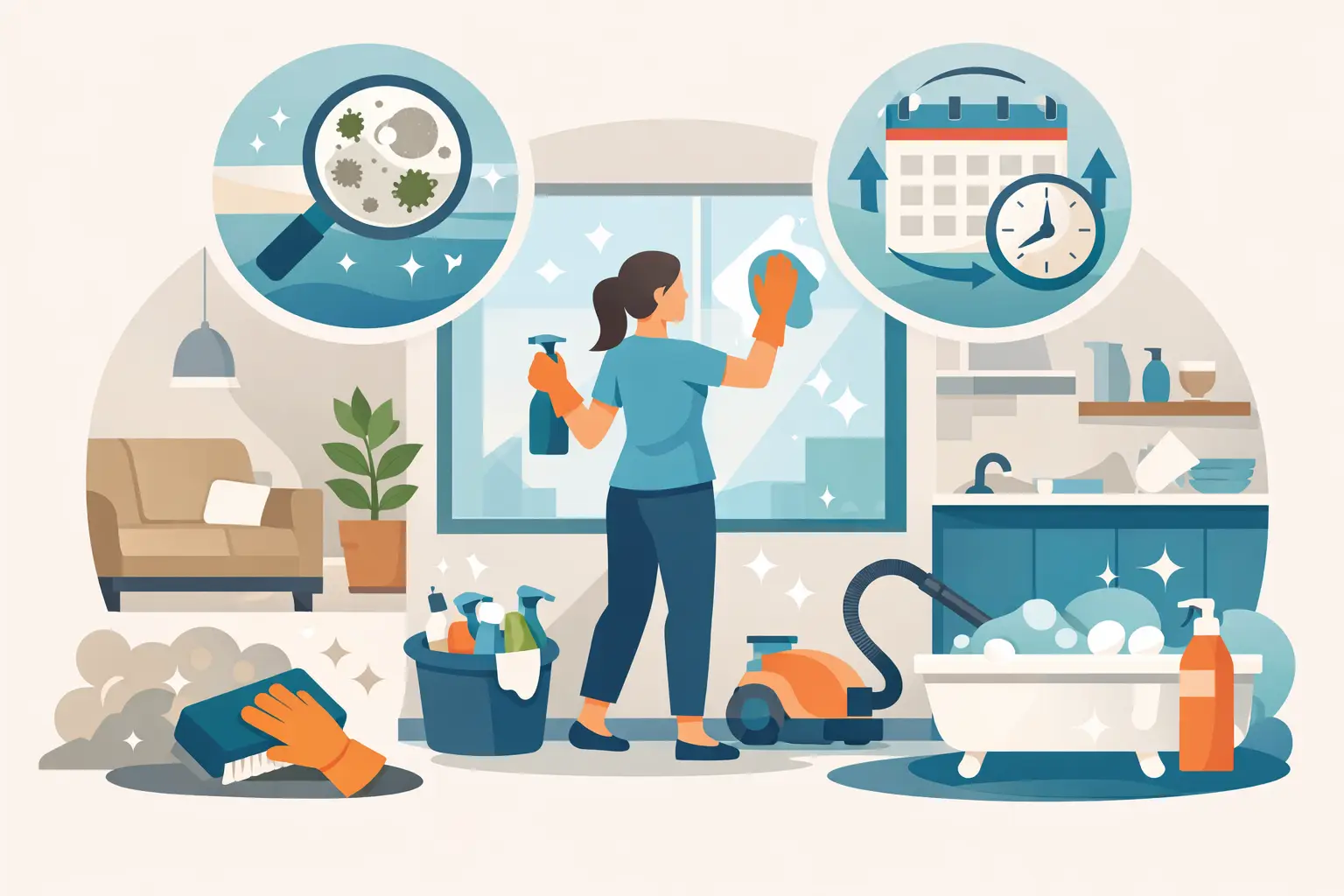
If you are asking when should you deep clean, it is usually because your regular clean is no longer doing the job. The kitchen still feels greasy after a wipe-down, the bathroom never quite looks fresh, or clutter and dust seem to come back faster than usual. That is the point where surface cleaning stops being enough and a more thorough reset starts to make sense.
Deep cleaning is not something most people need to do every week. For busy households, rented properties, Airbnb turnovers, and commercial spaces, the right timing depends on how the space is used, who is using it, and what standard it needs to meet. The useful question is less about a fixed date on the calendar and more about knowing the signs.
When should you deep clean instead of doing a regular clean?
A regular clean keeps things under control. It covers the visible jobs - vacuuming, mopping, wiping worktops, cleaning the loo, and taking out the rubbish. A deep clean goes further. It deals with built-up grime, neglected corners, and the areas that get missed when you are moving quickly.
You should deep clean when dirt has had time to settle in. That might mean limescale on taps, grease on cupboard doors, dust behind furniture, marks on skirting boards, or a fridge that needs more than a quick wipe. If a room looks tidy but still feels dirty, that is often the clearest sign.
Timing also changes by property type. A one-bedroom flat with one occupant may only need a full deep clean every few months. A family home with children and pets may need it more often. Short-let properties and restaurants can need specialist attention on a tighter schedule because wear builds up faster and standards are less forgiving.
The most common times to book a deep clean
There are a few points in the year or tenancy cycle when a deep clean makes practical sense.
Before or after moving
Moving in is one of the most common triggers. Even if a place looks acceptable, many tenants prefer a proper clean before unpacking. It is easier to clean empty rooms, inside cupboards, appliances, and awkward corners before furniture goes in.
Moving out is even more straightforward. If you are ending a tenancy, a deep clean helps bring the property back to a presentable standard and can support deposit-related expectations. It is especially relevant in rented homes where kitchens, bathrooms, and carpets show use quickly.
At the change of season
A seasonal reset still has value, even if you are not interested in the phrase spring clean. After winter, homes often need attention around condensation, dust, soft furnishings, and windows. Before autumn or the Christmas period, many households want to get ahead of indoor build-up because windows stay closed more often and guests may be visiting.
For most homes, every three to six months is a sensible benchmark for a proper deep clean. That is frequent enough to prevent build-up becoming harder and more expensive to tackle.
After building or renovation work
This is one case where regular cleaning is not enough. Fine dust settles everywhere - on ledges, inside cupboards, around sockets, and across floors long after the work is finished. After builders cleaning is a specialist job because the mess is different. If you have had decorating, flooring, kitchen fitting, or major repairs done, the answer to when should you deep clean is simple: straight after the work ends.
Before hosting or after a busy period
If you are expecting guests, family visits, or a run of bookings in a short-let property, a deep clean creates a cleaner baseline. It also reduces the pressure of trying to hide built-up dirt with a quick tidy. After a busy stretch, it helps get the property back to normal.
This matters for Airbnb hosts in particular. Regular changeovers keep a property operational, but they do not always cover the gradual build-up in ovens, grout, extractor fans, upholstery, and under furniture.
Signs your home is overdue for a deep clean
Some signs are obvious. Others are easy to ignore because you see them every day.
If your bathroom smells clean for only a few hours after you wash it, there may be hidden build-up around drains, grout, seals, or behind the toilet. If your kitchen surfaces feel sticky even after wiping, grease has probably spread beyond the hob. If dust returns immediately, it may be collecting in fabrics, vents, blinds, and less visible areas rather than just on open surfaces.
You should also pay attention to the jobs you keep postponing. The inside of the oven, the tops of cabinets, behind the sofa, inside the fridge, windows on the inside, and under the bed are all areas that tend to signal the shift from maintenance cleaning to deep cleaning.
For allergy sufferers, timing can be more urgent. If sneezing, congestion, or irritation gets worse indoors, deep cleaning soft furnishings, skirting, carpets, and hidden dust traps can make a noticeable difference.
How often should different spaces be deep cleaned?
There is no universal rule, but some rough timing works for most properties.
Kitchens usually need deep cleaning most often because grease, food residue, and bacteria build up quickly. Every one to three months is realistic for active kitchens, especially if you cook most days.
Bathrooms often benefit from a deep clean every one to two months, particularly in households with multiple occupants. Limescale, soap scum, and moisture build-up rarely stay under control with light cleaning alone.
Bedrooms and living areas can usually be deep cleaned every three to six months unless you have pets, ongoing allergy issues, or limited time for routine upkeep. Upholstery, carpets, curtains, and under-furniture areas matter most here.
Commercial spaces depend on traffic and use. A small office may only need periodic deep cleaning around carpets, kitchens, and washrooms. Restaurants, hospitality venues, and customer-facing premises often need more frequent specialist work because hygiene standards and customer impressions are part of day-to-day operations.
When should you deep clean if you are short on time?
For many people, the honest answer is when the backlog starts affecting daily life. If cleaning keeps moving down the list because work is busy, you are commuting, managing a tenancy, or handling multiple properties, deep cleaning becomes less about preference and more about resetting control.
That does not always mean doing the entire property in one go yourself. In practice, many people book a deep clean at key pressure points, then keep up with lighter maintenance in between. That approach is often more realistic than aiming for constant perfection.
The trade-off is cost versus time. Leaving a property too long can make the clean more demanding. Booking earlier can be more efficient because the job is faster, the results tend to last longer, and you avoid the point where several neglected tasks pile up at once.
Deep clean or specialist clean?
This is where people sometimes book the wrong service. A general deep clean is ideal for homes and premises that need thorough attention across kitchens, bathrooms, floors, surfaces, and hidden build-up. But some situations call for something more specific.
End of tenancy cleaning is designed around moving standards and property handover. After builders cleaning is for construction dust and residue. Oven cleaning focuses on heavy grease and carbon build-up. Bin cleaning deals with odour and waste residue that regular household cleaning does not cover well.
If the issue is concentrated in one area, a specialist clean may be the better fit. If the whole property feels overdue, a deep clean is usually the right starting point.
A practical way to decide
If you are still unsure when should you deep clean, ask three quick questions. Has dirt built up beyond what your weekly clean can manage? Is there an event, move, booking, or seasonal change coming up? Are you spending more time noticing the mess than actually staying on top of it?
If the answer is yes to any of those, it is probably time.
For busy households and property users, the best cleaning schedule is the one you can actually maintain. A deep clean is not about chasing a showroom finish. It is about restoring hygiene, making the space easier to manage, and preventing small issues from turning into a bigger job later.
If life has moved faster than your cleaning routine, that is usually your signal. Book the reset, get the property back to a workable standard, and make the next clean easier than the last.