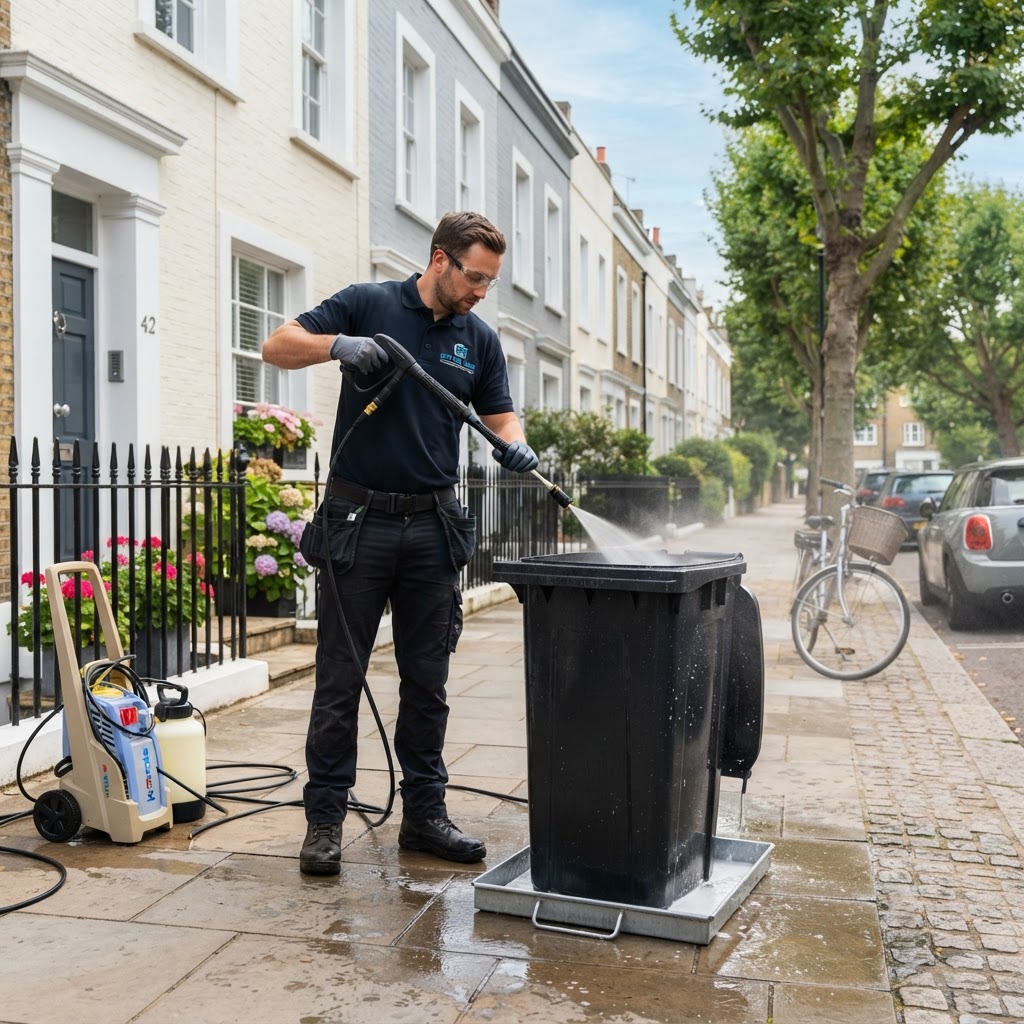
Ideally, you should aim to have your wheelie bins cleaned thoroughly every four to eight weeks to prevent the build-up of bacteria and pests. For a sanitised home environment, our team at Let Us Clean 4u recommends adjusting this frequency based on your local council collection schedules and household waste volume.
Seasonal Factors and Bin Hygiene
Summer months in London present the greatest challenge for bin hygiene. The combination of rising temperatures and decaying food waste creates an ideal environment for bacteria to multiply rapidly, leading to foul odours that can permeate your outdoor living space. During July and August, we suggest more frequent maintenance to manage these smells effectively before they become overwhelming for you and your neighbours.
Winter requires a different approach, as colder temperatures naturally slow down bacterial growth and pest activity. However, damp conditions can still lead to mould development, especially if your bins are stored in shaded areas. Maintaining a consistent routine regardless of the weather is the best way to ensure your bins remain in a usable condition year-round, covering all households across all London areas.
- Clean every four weeks during summer months to combat heat-related odours.
- Schedule a deep clean every eight weeks during winter to prevent mildew.
- Always ensure bin lids are shut tightly to keep out rain and pests.
Tailoring Frequency to Your Household
The frequency of cleaning depends largely on the amount of waste your household generates. Larger families with significant amounts of organic kitchen waste will naturally require more frequent cleaning sessions compared to single households. If your bins are regularly overflowing or you notice residues at the bottom, this is a clear sign that you need to increase your sanitation schedule to avoid persistent grime.
Consider the type of waste you dispose of daily. If you frequently toss heavy food waste directly into the main wheelie bin without proper bagging, your bin will require professional attention much sooner. Regularly sanitising your food waste caddy is equally important, as this small bin is often the primary source of smells that attract flies and rodents to your property.
- Families with high waste volume: every four weeks.
- Small households or flats: every eight weeks.
- Properties with outdoor bin storage: check monthly for debris.
Managing Pests and Summer Odours
Maggots are a common concern in London during the warmer months, often appearing when flies lay eggs on exposed food waste. To mitigate this risk, never leave food scraps loose in the bin; always use tied liners and ensure your bin lid fits snugly. Even with these precautions, professional cleaning is the only way to remove the microscopic bacteria and stubborn residues that attract these pests in the first place.
When dealing with persistent issues, it is helpful to look at broader cleaning habits, similar to how one might approach How Often Should You Professionally Clean Your Oven?. Professional cleaning services utilise high-pressure equipment that reaches deep into the corners where debris collects. This process not only removes the dirt but also sanitises the plastic, which is essential for maintaining health standards in a dense urban environment like London.
- Always double-bag food scraps before placing them in the bin.
- Keep your bin in the shade to reduce the rate of organic decay.
- Request professional sanitisation if you spot flies hovering near your bin.
Professional Cleaning Versus DIY Efforts
While it is tempting to tackle bin cleaning with a garden hose and some detergent, the reality of Professional cleaning vs DIY: is it worth it in London? often comes down to the quality of equipment and water disposal. DIY methods often fail to reach the stubborn, dried-on waste at the bottom of the bin. Furthermore, improper disposal of greywater into street drains is discouraged, whereas professional services ensure that all waste is handled responsibly and legally.
Professional services offer convenience and a level of deep cleaning that is difficult to replicate at home. Whether you live in a borough with specific waste collection rules, such as those discussed in Bin Cleaning in Hackney: Wheelie Bin Sanitising for Estates and Homes, or need dedicated Bin Cleaning in Barnet: Keeping Wheelie Bins Clean for Finchley Estates and Homes, relying on experts ensures your property remains clean and compliant. Our DBS-checked team provides a thorough, insured service that saves you time and effort.
- Professionals use eco-friendly chemicals that kill bacteria on contact.
- High-pressure equipment removes sludge that a garden hose cannot touch.
- Hiring experts prevents the risk of contaminated water runoff on your driveway.
Frequently asked questions
Can I use bleach to clean my own bin?
Bleach can be harsh and may damage the plastic over time; it is also harmful to local wildlife if the runoff enters the storm drains.
How do I stop my bins from smelling in the summer?
Keep bins out of direct sunlight, ensure all food waste is securely bagged, and schedule a professional deep clean every four weeks.
Are your cleaners insured and vetted?
Yes, all our staff are fully insured and DBS-checked, ensuring reliable and professional service for every customer across London.
Ready to get your wheelie bins sparkling clean and odour-free? Let Us Clean 4u is here to help residents across all 33 London boroughs. You can book our professional cleaning services online at https://letusclean4u.com/BookCleaningService or give our team a call on 07961 597215 to discuss your needs today.
Tags:
Related Articles

Move Out Cleaning vs End of Tenancy Cleaning: The Differences
Discover the key differences between general move out cleaning and professional end of tenancy cleaning standards to ensure you get your deposit back.

After Party Cleaning in London: What a Professional Clean Covers
Host your celebration without the stress of the aftermath. Discover exactly how professional cleaners restore your London home to pristine condition.
A Local Guide to Keeping Your Bayswater Home Clean
Practical tips for maintaining your Bayswater property, from managing hard water to coordinating parking and access for cleaners.